Hernando County Traffic Court handles cases involving traffic tickets, moving violations, and other driving-related offenses issued within the county. Drivers who receive a traffic citation may need to pay a fine, attend a court hearing, complete a traffic school program, or address other court requirements based on the type of violation. The court plays a key role in enforcing Florida traffic laws and reviewing cases involving speeding tickets, red-light violations, careless driving, license offenses, and insurance-related matters. Many residents search for information about traffic court procedures, citation penalties, court dates, and available options after receiving a ticket. Accurate knowledge of the local traffic court process can help drivers understand what steps may apply to their specific case.
Traffic violations in Hernando County can range from minor infractions to more serious driving offenses that carry fines, points on a driving record, or other legal consequences. The traffic court reviews citation details, court filings, and evidence presented in each matter before deciding on Florida law. Cases may involve speeding, failure to obey traffic signals, improper lane usage, registration violations, suspended license issues, or other roadway offenses. Many drivers seek information about contesting a traffic citation, resolving a pending ticket, or meeting court obligations after receiving a notice. This page covers key details about Hernando County Traffic Court, common traffic violations, citation procedures, potential penalties, court appearances, and other topics related to traffic cases within the county.
What Is Hernando County Traffic Court?
Hernando County Traffic Court operates as a division of the county court system. It handles all traffic-related legal matters for the local area. This court focuses exclusively on driving offenses and related infractions. The court functions under Florida state law. A county judge presides over the hearings. The clerk of the court manages the documentation and records for every case. This local tribunal provides a structured environment for resolving disputes. Drivers can contest their charges or accept responsibility here. The entire process follows strict legal protocols.
Purpose of Traffic Court
The primary purpose of traffic court is to maintain public safety on the roads (https://hernandoclerk.com/court-services/traffic/). The court achieves this by holding drivers accountable for their actions. Judges review the facts of each case. They apply penalties that match the severity of the offense. The court also offers a venue for drivers to challenge unjust citations. This balance protects community safety and defends individual rights.
Cases Commonly Handled
The court handles a wide variety of driving offenses. Common cases include:
- Moving Violations: Speeding, reckless driving, and failure to yield.
- Non-Moving Violations: Expired registrations, broken equipment, and illegal parking.
- Serious Offenses: Driving under the influence (DUI) or driving with a suspended license.
- Municipal Ordinances: Local traffic rule violations within Brooksville and Spring Hill.
Each case type follows a specific legal pathway. The court processes thousands of these cases every year.
How Traffic Cases Move Through the Court System
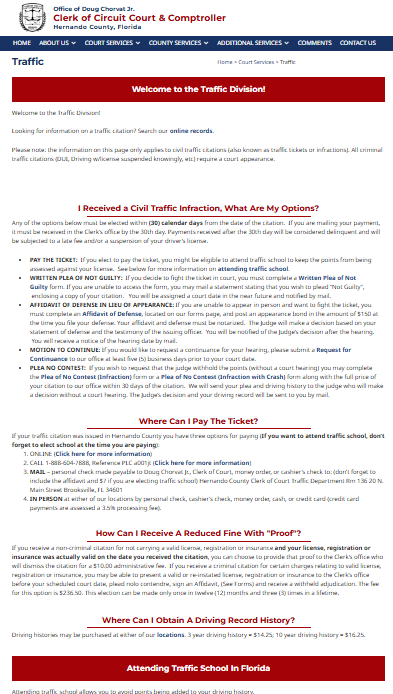
A traffic citation begins its journey when a law enforcement officer issues a ticket. The officer files the citation with the clerk of court. Next, the court opens a formal case file. The driver must then respond within a set timeframe. They can pay the fine, attend a driver improvement course, or request a hearing.
If the driver requests a hearing, the court schedules a date. On the hearing date, both the officer and the driver present their sides. The judge reviews the evidence and makes a final ruling. The court then records the outcome. The driver must comply with the judge’s orders. If the driver misses a deadline, the court may impose additional penalties.
| Case Step | Action Required |
|---|---|
| Citation Issuance | Officer hands the ticket to the driver |
| Court Filing | Officer submits the citation to the clerk |
| Driver Response | Driver pays, elects school, or requests hearing |
| Hearing (if elected) | Judge hears testimony and reviews evidence |
| Final Judgment | Court records the outcome and applies penalties |
Common Traffic Violations in Hernando County
Drivers in Hernando County frequently encounter various traffic violations. These infractions range from minor parking errors to severe driving offenses. The state categorizes these violations based on their danger level. Knowing these categories helps drivers understand their charges. Law enforcement actively monitors local roads. Officers issue citations to discourage dangerous driving behaviors. The most common traffic violations in Hernando County involve moving violations. These actions directly threaten road safety.
Moving Violations
Moving violations occur when a vehicle breaks a traffic law while in motion. These offenses carry harsher penalties because they endanger others. Common moving violations include:
- Speeding Ticket: Exceeding the posted speed limit. Speeding remains the top traffic violation locally.
- Reckless Driving: Operating a vehicle with willful disregard for safety.
- Failure to Yield: Not giving the right-of-way to other drivers or pedestrians.
- Red Light Violation: Entering an intersection after the traffic light turns red.
- Stop Sign Violation: Failing to come to a complete stop at an intersection.
- Careless Driving: Failing to drive carefully.
Officers use radar, lasers, and traffic cameras to catch these offenses. A moving violation almost always adds DMV points to a driving record.
Non-Moving Violations
Non-moving violations involve illegal actions while the vehicle is stationary. These infractions typically carry smaller fines and no DMV points. Examples include:
- Parking in a handicap spot without a placard.
- Driving with an expired tag or registration.
- Operating a vehicle with broken headlights or taillights.
- Lack of valid insurance documentation.
Drivers can often fix the issue, like replacing a broken light, and have the fine dismissed with proof of correction.
Serious Traffic Offenses
Serious traffic offenses pose a massive risk to public safety. The court treats these crimes with severe consequences. A judge often requires a mandatory appearance for these charges. Examples include Driving Under the Influence (DUI), fleeing the scene of an accident, and street racing. Convictions bring heavy fines, license suspension, and potential jail time.
Repeat Violations
Repeat violations happen when a driver commits the same offense multiple times. The court imposes escalating penalties for habitual offenders. For instance, a second speeding ticket within a year costs more than the first. Multiple moving violations lead to rapid point accumulation. The DMV may suspend the driver’s license if they collect too many points within a specific timeframe.
The Traffic Citation Process
The citation process begins when a law enforcement officer observes a traffic violation. This official process dictates how the court learns about the offense and how the driver must respond.
Officers document the violation and provide the driver with a formal notice. This document initiates the legal timeline. The driver must then interact with the court system to resolve the matter. Ignoring this process leads to severe legal and financial trouble.
Receiving a Traffic Citation
During a traffic stop, the officer explains the reason for the stop. They verify the driver’s license, registration, and insurance. The officer then writes the traffic citation. The citation includes the driver’s details, the specific violation, and the statute violated. The officer hands the ticket to the driver. The driver signs the ticket, acknowledging receipt. This signature does not admit guilt.
Reviewing the Violation Information
After the stop, the driver must review the citation carefully. The ticket contains vital data:
- Citation Number: A unique identifier for the case.
- Court Date: The deadline to respond or appear.
- Violation Details: The exact nature of the offense.
- Fine Amount: The base cost of the ticket.
Drivers should verify all information on the ticket. Errors sometimes occur, which can affect the case.
Response Deadlines
The law grants drivers 30 days to respond to traffic tickets. This countdown starts on the date the officer issued the citation. Failing to respond within this window triggers automatic penalties. The court may issue a late fee, suspend the driver’s license, or issue a warrant for arrest. Marking the calendar helps avoid these outcomes.
Available Options After Receiving a Ticket
Drivers have three main choices after receiving a ticket:
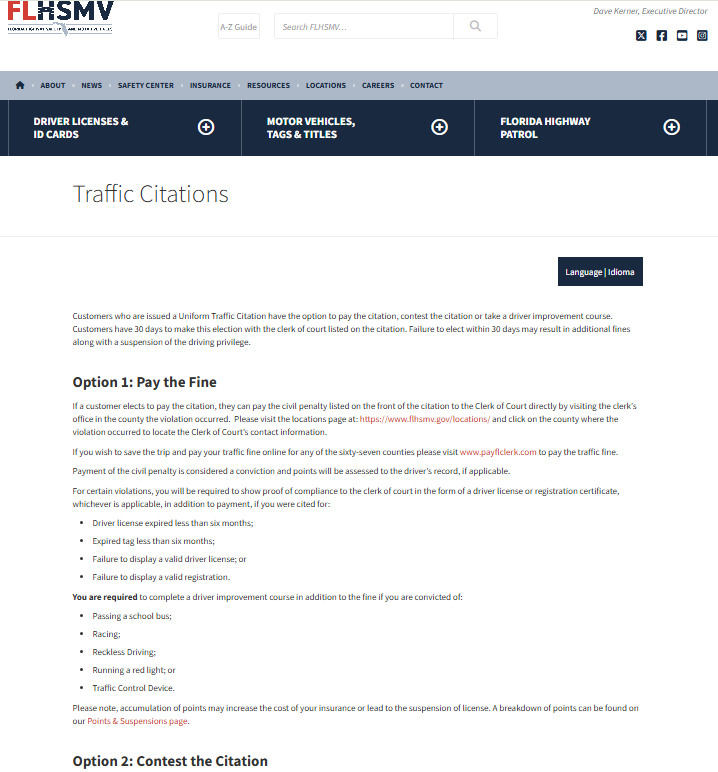
- Pay the Fine: Drivers admit guilt and pay the full amount. The court closes the case, and DMV points apply.
- Elect Traffic School: Drivers pay the fine, attend an approved course, and keep points off their record. The court allows this option once per year.
- Request a Hearing: Drivers contest the ticket before a judge. They present evidence, and the judge decides the outcome.
Each option requires action within the 30-day window.
Traffic Ticket Payment Options
Paying a traffic ticket resolves the case without a court hearing. The court offers several convenient payment methods. Drivers must understand when they can pay and how much they owe. Timely ticket payment prevents extra penalties. The clerk of the court processes all payments. Drivers must submit the exact amount, including any court costs.
When Payment Is Allowed
Drivers can pay their ticket anytime before their scheduled court date. Payment acts as a plea of guilty. The court accepts payment for standard moving violations and non-moving violations. Serious offenses, like DUI, do not allow simple payment. These severe charges require a court appearance. Drivers who wish to contest their ticket should not pay the fine beforehand.
Payment Deadlines
The court sets strict payment deadlines. The full balance must clear by the 30-day mark from the citation date. Late payments incur additional penalties. The court adds a late fee to the original fine. The DMV also receives notice of the unpaid ticket. The DMV will then suspend the driver’s license until they resolve the debt. Paying on time avoids these complications.
Consequences of Missing Deadlines
Missing a payment deadline creates immediate problems. The clerk of the court issues a suspension notice to the DMV. The driver’s license gets suspended indefinitely. Driving on a suspended license leads to arrest and new criminal charges. The court may also send the unpaid debt to a collection agency. Collection agencies add steep fees to the original balance.
Court Costs and Additional Fees
The base fine rarely reflects the total amount owed. Florida law mandates extra court costs and fees on every ticket. These additional funds support local and state programs.
Additions include:
- Court Costs: Administrative fees for processing the case.
- Trust Funds: Contributions to state trauma centers and emergency services.
- Late Fees: Penalties for missing the 30-day deadline.
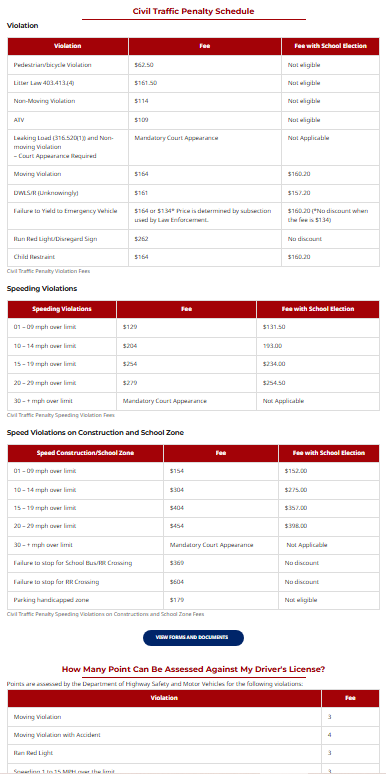
| Violation Type | Base Fine | Average Total with Costs |
|---|---|---|
| Speeding (15 over) | $150 | $266 |
| Red Light Violation | $125 | $241 |
| Stop Sign Violation | $125 | $241 |
Drivers must budget for the total amount, not just the base fine.
When a Court Appearance Is Required
A court appearance demands the driver’s physical presence before a judge. Some traffic tickets allow drivers to simply pay the fine. Others mandate a hearing. Drivers must know the difference to avoid legal trouble. The court schedules hearings to review serious allegations. A judge evaluates the facts and listens to both sides. This formal setting requires proper preparation.
Voluntary Appearances
Drivers can choose a voluntary appearance to contest a ticket. If a driver believes the officer made a mistake, they can request a hearing. This choice gives the driver a chance to present evidence. The judge listens to the officer’s testimony and the driver’s defense. The judge then renders a verdict. A voluntary appearance carries no extra penalty if the driver loses, other than the original fine and court costs.
Mandatory Appearances
A mandatory appearance means the driver must attend the hearing. The court requires attendance for severe infractions. Examples include:
- Driving Under the Influence (DUI)
- Reckless driving
- Fleeing the scene of an accident
- Driving with a suspended license
The citation will clearly state if a mandatory appearance applies. Failure to appear results in immediate legal action. The judge issues a bench warrant for the driver’s arrest.
Preparing for Court
Proper preparation improves the outcome of a hearing. Drivers should gather all relevant evidence. This evidence might include photographs, witness statements, or GPS data. Organizing documents helps the judge understand the situation. Drivers must dress appropriately and arrive early. Punctuality shows respect for the court. Turning off cell phones prevents disruptions. Bringing a notepad helps drivers take notes during the testimony.
What Happens During a Hearing
The hearing follows a structured format. The judge calls the case and swears in the participants. The law enforcement officer testifies first. The officer explains why they issued the ticket. Next, the driver presents their defense. The judge may ask questions to clarify details. After hearing both sides, the judge makes a final decision. The judge can dismiss the ticket, find the driver guilty, or reduce the charges.
DMV Points and Driver License Consequences
Florida uses a point system to track driving behaviors. The Department of Motor Vehicles (DMV) assigns points for traffic violations. Accumulating points brings severe driver’s license https://www.flhsmv.gov/traffic-citations/, consequences. Points stay on a driving record for several years. They signal risk to insurance companies and the state. Avoiding point accumulation protects driving privileges and keeps insurance rates low.
How Points Are Assigned
The DMV assigns points based on the severity of the offense. Minor infractions carry fewer points. Serious offenses carry maximum points. The court notifies the DMV after a driver pays a fine or loses a hearing. The DMV then adds the points to the driver’s official record. Points are not assigned for non-moving violations.
Common Violations and Point Assessments
Different moving violations carry different point values. Standard point assessments include:
- Speeding (15 mph or less over): 3 points
- Speeding (16+ mph over): 4 points
- Red Light Violation: 3 points
- Stop Sign Violation: 3 points
- Failure to Yield: 3 points
- Reckless Driving: 4 points
- Leaving the scene of a crash (with damage): 6 points
These points accumulate quickly. Multiple tickets in a short period create major problems.
Effects on Driving Records
DMV points remain on a driving record for 36 months from the conviction date. The point total directly impacts driving privileges. Florida law mandates license suspension for excessive points:
- 12 points in 12 months: 30-day suspension
- 18 points in 18 months: 90-day suspension
- 24 points in 36 months: 12-month suspension
The DMV mails a suspension notice to the driver’s address on file. Ignorance of the point total does not prevent suspension.
Insurance Considerations
Insurance companies regularly check driving records. They view point accumulation as a sign of high risk. Drivers with points face steep insurance premium increases. Some insurance companies may cancel the policy entirely. Attending a defensive driving course can sometimes offset these increases. Keeping a clean record guarantees the best insurance rates.
License Suspension and Reinstatement Information
License suspension removes a person’s legal right to drive. The DMV enforces suspensions for various reasons. Reinstatement requires specific steps and compliance requirements. Driving with a suspended license invites harsh penalties. Drivers must understand why suspensions happen and how to restore their driving privileges.
Reasons for Suspension
The DMV suspends licenses for several reasons. Common causes include:
- Excessive DMV Points: Reaching the point limit within a set timeframe.
- Unpaid Traffic Tickets: Failing to pay fines or court costs by the deadline.
- Serious Offenses: Convictions for DUI, reckless driving, or fleeing a crash.
- Failure to Appear: Missing a mandatory court date.
- Lack of Insurance: Driving without the required auto insurance.
The DMV sends a formal notice before the suspension takes effect. Drivers must resolve the underlying issue to stop the suspension.
Suspension Duration
The suspension period varies based on the offense. A point-based suspension lasts 30 days to one year. A DUI suspension can last up to a year for a first offense. Unpaid ticket suspensions remain active until the driver pays the debt. The court notifies the DMV once the driver satisfies the requirement. The DMV then clears the suspension.
Reinstatement Procedures
Drivers cannot legally get behind the wheel until they complete reinstatement procedures. The process involves several steps:
- Resolve the Cause: Pay outstanding fines, complete court requirements, or serve the suspension period.
- Pay Reinstatement Fees: The DMV charges a fee to restore the license. Fees range from $45 to over $100, depending on the offense.
- Provide Proof: Submit proof of insurance (SR-22) or course completion if mandated.
- Receive Clearance: The DMV issues clearance, allowing the driver to operate a vehicle again.
Drivers can complete these steps online, by mail, or at a local DMV office.
Maintaining Driving Privileges
Keeping driving privileges active requires consistent responsibility. Drivers should obey all traffic laws. They must pay fines promptly. Handling a traffic citation within the 30-day window prevents suspension. Attending traffic school keeps points off the record. Regularly checking a driving record helps drivers catch errors early.
Driver Improvement and Defensive Driving Courses
Driver improvement courses offer education and potential benefits for drivers facing traffic violations. These classes teach safe driving techniques and review traffic laws. Drivers can elect to attend a defensive driving course to keep points off their record. The court and the DMV approve specific education programs.
Course Eligibility
Not every driver qualifies for traffic school. Florida law sets strict eligibility rules. A driver qualifies if they:
- Hold a valid non-commercial driver’s license.
- Have not attended traffic school in the past 12 months.
- Have not made five school elections in their lifetime.
- Received a moving violation that does not require a mandatory appearance.
Drivers must notify the court of their election within 30 days of receiving the ticket.
Potential Benefits
Completing a driver improvement course offers several advantages:
- No DMV Points: The court withholds adjudication, so points do not hit the driving record.
- Insurance Protection: Insurance companies cannot raise rates based on the dismissed ticket.
- Skill Refresh: Drivers review current laws and safe habits.
This option saves money in the long run by preventing insurance hikes.
Completion Requirements
Drivers must attend an approved Florida defensive driving course. Courses are available online or in person. The class typically takes four to eight hours. Drivers must pass a final quiz. After completion, the driver submits the certificate to the clerk of the court. The driver must also pay the fine and court costs. Failing to submit the certificate results in a guilty conviction and points.
Traffic Court Records and Case Search Information
Traffic court records document the history and outcome of every citation. The public can access most of these documents. A traffic case search helps drivers track their legal obligations. The clerk of the court maintains an online portal for easy case lookup. Drivers can view docket information, fines, and hearing dates without visiting the courthouse.
Available Case Information
The online system provides detailed case information. Users can view:
- Citation Details: The violation type and statute number.
- Hearing Dates: Scheduled times for court appearances.
- Fine Amounts: Current balances, including court costs.
- Case Status: Whether the case is open, closed, or past due.
- Court Dispositions: The final judgment issued by the judge.
This data helps drivers stay organized and informed.
Searching Court Records
Performing a traffic case search requires basic details. Users need the citation number or the driver’s name. Follow these steps to search:
- The Hernando County Clerk of Court website.
- Navigate to the “Traffic Case Search” portal.
- Enter the citation number or personal details.
- Click search to view the results.
The system updates regularly, but recent citations may take a few days to appear.
Accessing Public Records
Florida law guarantees public access to most court records. Citizens can view case files during regular business hours at the clerk’s office. Online portals provide 24/7 access. Some historical records may require a formal public records request. The clerk may charge a small fee for printed copies of documents.
(FAQs) About Hernando County Traffic Court
People often have questions about Hernando County Traffic Court. This section answers common inquiries regarding traffic tickets, moving violations, and legal procedures.
How Do I Respond to a Traffic Ticket?
Drivers must respond within 30 days of receiving the citation. They have three options:
- Pay the Fine: Admit guilt and submit payment online, by mail, or in person.
- Elect School: Pay the fine, attend an approved course, and submit the certificate.
- Request a Hearing: Plead not guilty and schedule a court date to contest the charges.
Failing to choose an option results in late fees and license suspension.
Can I Pay a Ticket Without Appearing in Court?
Yes, most traffic tickets do not require a court appearance. Drivers can pay the ticket directly to the clerk of court. Payment acts as a guilty plea. The court closes the case. Mandatory appearance tickets, like DUI charges, forbid this option. The citation clearly states if a court appearance is mandatory.
What Happens If I Miss My Court Date?
Missing a court date brings serious consequences. The judge issues a “Failure to Appear” notice. The court adds a late fee to the original fine. The clerk notifies the DMV, which suspends the driver’s license. The judge may also issue a bench warrant for the driver’s arrest. Drivers who miss their date should contact the clerk immediately to reschedule.
How Do DMV Points Affect My Driving Record?
DMV points track risky driving behavior. The state adds points for moving violations. Points remain on the record for 36 months. Accumulating too many points triggers an automatic license suspension. Insurance companies review driving records and raise premiums for drivers with points. Attending traffic school prevents points from hitting the record.
Can Traffic Violations Lead to License Suspension?
Yes, traffic violations frequently lead to license suspension. The DMV suspends licenses for excessive point accumulation. They also suspend licenses for unpaid traffic tickets. Serious offenses, like reckless driving or DUI, carry mandatory suspension periods. Resolving tickets on time prevents suspension.