Hernando County Probate Court handles legal matters connected to estates after a person’s death. It manages cases involving wills, property distribution, and court supervision of estate settlement under Florida probate law. The court operates within the local judicial system and follows procedures set for probate cases in Hernando County. These matters fall under the broader structure of the Fifth Judicial Circuit of Florida, where filings related to estate administration are reviewed and processed in an organized manner.
The probate division of Hernando County handles a wide range of estate-related filings that include the validation of wills, the appointment of a personal representative, and the supervision of asset distribution. It also manages guardianship cases involving minors or adults who need legal protection. Estate administration tasks often include reviewing debts, verifying claims from creditors, and confirming rightful heirs under state law. The Hernando County Probate Court works through structured hearings and documentation to complete the lawful transfer of assets. Each case follows set legal procedures that support fair resolution of estate matters and protection of property rights within the county system.
What Is Hernando County Probate Court?
Hernando County probate court is a specialized legal division that handles deceased individuals’ estates and guardianship matters. This estate court operates under Florida law to validate wills and supervise asset distribution.
Court Definition and Legal Jurisdiction
The court holds legal jurisdiction over assets located within Hernando County. If a person owned a home in Spring Hill or a business in Brooksville, this court controls the property transfer. The probate court only handles cases related to estates, trusts, and incapacitated persons. It does not hear criminal or general civil cases.
Types of Probate Matters
The court supervises several distinct types of cases. These include formal administration, summary administration, and disposition without administration. Formal administration handles large, complex estates. Summary administration applies to smaller estates or those where the decedent passed away more than two years ago. Disposition without administration handles very small estates with no real estate.
- Formal Administration: Full court-supervised process.
- Summary Administration: Shortened process for small estates.
- Disposition: Quick asset transfer for exempt property.
Probate Court vs. Civil Court
Civil court resolves disputes between living parties, like contract breaches or personal injury claims. The probate court focuses entirely on estate administration, wills, and protecting incapacitated persons. The estate settlement court deals with transferring titles after death. Civil court handles lawsuits between living plaintiffs and defendants. Probate judges look at the decedent’s intent through their will, while civil judges examine contracts or torts.
Protecting Beneficiaries and Creditors
The court-supervised inheritance process protects everyone involved. Creditors receive a legal window to file claims against the estate. Beneficiaries gain assurance that the executor acts according to the law. The judge steps in if someone disputes the will’s validity. This oversight prevents personal representatives from hiding assets or skipping debts.
How Probate Cases Work in Hernando County
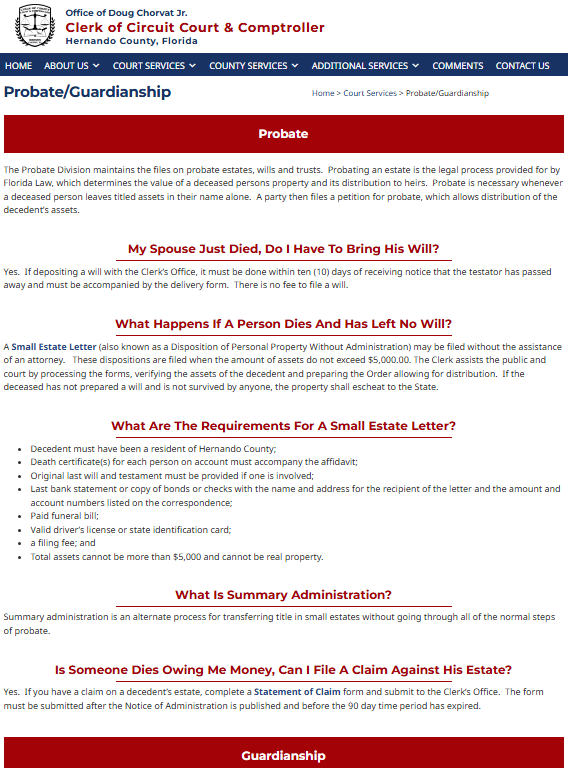
Probate cases in Hernando County move through a structured court-supervised process that handles a person’s estate after death. These probate proceedings focus on validating wills, paying debts, https://hernandoclerk.com/court-services/probate-guardianship/ and transferring assets to rightful heirs. The probate process follows clear estate administration steps from filing to final distribution of inheritance.
Filing Petition for Probate Proceedings
The probate process begins with filing a petition in the local court. This action starts estate administration and opens the case for review. A family member, named beneficiary, or proposed executor submits the petition. The filing includes basic details about the deceased person, the death certificate, and any known wills.
Filings include:
- Petition for administration of estate
- Original will (if available)
- Death certificate
- List of known heirs
The court reviews the submission and assigns a case number. This step sets the legal path for the estate settlement procedure under court supervision.
Validating Wills in Probate Cases
After filing, the court focuses on wills. This step confirms whether the document meets legal requirements for acceptance. Judges review the will for signatures, witnesses, and proper execution. If the will meets state standards, it becomes the main document for estate distribution. If no valid will exists, the case follows intestate succession laws for inheritance distribution.
Review actions include:
- Checking witness signatures
- Confirming the mental capacity of the deceased
- Reviewing possible disputes from heirs
- Confirming the authenticity of the document
Once validated, the will directs how assets move through probate proceedings. This step shapes the entire estate settlement procedure.
Appointing an Executor for Estate Administration
After will validation, the court appoints an executor or personal representative. This person manages estate administration under court supervision. If a will names an executor, the court usually approves that person. If not, the court selects a qualified individual, often a close family member.
Executor duties include:
- Managing estate accounts
- Collecting financial records
- Handling communication with heirs
- Reporting progress to the court
The executor acts as the central figure in probate cases. Their role connects all stages of the estate settlement procedure, from asset collection to final distribution.
Asset Inventory and Debt Settlement Process
Once appointed, the executor prepares a full inventory of assets. This step lists everything owned by the deceased, including property, bank accounts, and personal items. The estate administration phase also includes identifying debts and obligations. Creditors may file claims during this period.
Typical estate assets include:
- Real estate properties
- Bank accounts and savings
- Vehicles and valuables
- Investment accounts
Debt settlement follows asset identification. The executor pays valid claims using estate funds before any inheritance distribution takes place.
Distribution of Assets and Court-Supervised Estate Distribution
After debts are cleared, the estate moves toward final distribution. This step completes probate proceedings and transfers remaining assets to heirs. If a will exists, assets are distributed based on its terms. Without a will, Florida inheritance laws determine the division.
Final estate settlement procedure steps include:
- Final accounting submitted to the court
- Court review of payments and claims
- Approval for distribution
- Transfer of property and funds to heirs
Court-supervised estate distribution confirms that all obligations are settled before assets move to beneficiaries. Once approved, the executor closes the estate.
Probate Division in Hernando County
The probate division hernando county manages all administrative and judicial functions for local estate cases. This division processes filings, schedules hearings, and maintains official case records.
Structure of the Probate Division
The division operates under a circuit judge who hears contested matters and signs final orders. A general magistrate sometimes handles routine procedural hearings to keep cases moving. The clerk of the circuit court serves as the official record keeper. This structural separation ensures checks and balances within the system.
Judge Responsibilities
The judge validates wills, appoints personal representatives, and resolves disputes among beneficiaries. They ensure the probate proceedings follow Florida statutes precisely. Judges hold hearings to address creditor objections or beneficiary complaints. They issue orders to compel uncooperative executors to perform their executor duties.
Court Staff Roles
Clerks accept petitions, collect filing fees, and manage the docket. Judicial assistants help the judge track case progress and manage the calendar. Self-represented litigants can visit the self-help center within the clerk’s office for standard forms. The staff cannot give legal advice, but they provide procedural guidance.
Filing Process Overview
Attorneys or self-represented individuals submit petitions to the clerk. The staff reviews documents for basic compliance before assigning a case number. Filers must provide copies for confirmation. The court then sets dates for hearings or issues orders based on the paperwork submitted.
| Role | Primary Responsibility |
|---|---|
| Circuit Judge | Final decisions, dispute resolution |
| General Magistrate | Routine hearings, case management |
| Clerk of Court | Document processing, record keeping |
| Judicial Assistant | Scheduling, judge support |
Wills, Estate Administration & Inheritance
Wills dictate how a person wants their property distributed after death. Estate administration carries out those wishes, while inheritance represents the assets beneficiaries receive.
What is a Will?
A will is a legal document that outlines a person’s final wishes. It names beneficiaries to receive property and nominates an executor to manage the estate. Wills must meet specific Florida legal requirements to function properly. The testator must sign the document in front of two competent witnesses.
What if No Will Exists?
When a person dies without a will, they die intestate. Florida intestacy laws determine who receives the property. The court appoints an administrator to handle the estate administration. The law prioritizes surviving spouses and children. If no immediate family exists, the search expands to parents, siblings, or more distant relatives.
Role of the Executor
The executor manages the entire estate settlement. They secure physical property, cancel credit cards, and open an estate bank account. Executor duties also include filing final tax returns and distributing assets. The executor owes a fiduciary duty to act in the best interest of the estate and its beneficiaries.
Estate Distribution Laws
Florida law protects certain family members during estate distribution. A surviving spouse has rights to the homestead property and may claim an elective share. The elective share guarantees the spouse 30% of the elective estate, even if the will excludes them. These laws prevent people from entirely disinheriting their spouses.
Beneficiary Rights
Beneficiaries hold specific rights during the probate proceedings. They can request a formal accounting of all estate transactions. They can petition the court to remove an executor who fails to perform their duties. Beneficiaries also retain the right to contest a will if they suspect fraud or undue influence.
Guardianship Cases in Probate Court
Guardianship cases in probate court establish legal authority for one person to make decisions for another. The court steps in to protect minors or incapacitated adults who cannot care for themselves.
Minor Guardianship
When parents die or become incapacitated, the court appoints a guardian for their minor children. The guardian assumes responsibility for the child’s daily care, education, and medical needs. The court often requires a separate guardian of the property to manage any inheritance left to the child until they turn 18.
Adult Guardianship
Adult guardianship involves individuals who lose the capacity to manage their own affairs. Stroke, dementia, or severe injury often leads to these petitions. A family member files a petition, and a medical committee evaluates the alleged incapacitated person. The judge strips away only the specific rights the person can no longer exercise.
Court Supervision
Judges maintain strict oversight over guardianship cases. Guardians must file annual reports detailing the ward’s condition and financial status. The court reviews these reports to confirm the ward’s safety and financial security. This ongoing supervision prevents abuse and neglect.
Legal Responsibilities of Guardians
Guardians must act in the ward’s best interest at all times. They must seek court approval before selling real estate or making major medical decisions. A guardian cannot mix the ward’s funds with their own money. Failing to follow court orders can result in removal and legal penalties.
Probate Court Filing Process in Hernando County
The probate filing process in Hernando County requires submitting specific documents to the clerk to open an estate case. Filers must follow strict formatting and procedural rules.
Required Documents
Petitioners must gather several critical documents before filing. The court requires an original will, a certified death certificate, and a petition for administration. Filers must also include a proposed order and a consent form if other beneficiaries agree to the appointment.
Filing Steps
First, the petitioner completes all required forms. Second, they file the paperwork with the probate division hernando county clerk. Third, the petitioner pays the filing fees. Finally, the court reviews the submission and issues the letters of administration. Attorneys often file documents electronically through the Florida Courts E-Filing portal.
Court Requirements
The court rejects documents that fail to meet formatting standards. All filings must use 8.5 x 11-inch paper with standard margins. The text must be legible, and parties must staple multiple pages together. Self-represented filers must include a cover sheet with their contact information.
Common Mistakes to Avoid
Many filers forget to attach the original will, causing immediate delays. Others fail to list all known heirs, which violates due process. Using outdated forms from the internet creates another common hurdle. Filers should always verify that they use the latest forms approved by the Florida Supreme Court.
- Missing Documents: Always include the original will and death certificate.
- Outdated Forms: Check the Fifth Judicial Circuit website for current versions.
- Improper Service: You must serve all interested parties with a copy of the petition.
Probate Court Records in Hernando County
Probate court records in Hernando County contain official documents related to estate settlements and guardianship cases. The public can view most of these files through the county clerk.
How to View Records
People can view probate court records by visiting the Brooksville courthouse or searching the official online portal. The clerk of the circuit court maintains these documents permanently. Researchers need the decedent’s name or case number to locate the correct file.
What Information is Public?
Most estate records remain open to the public. Wills, asset inventories, and court orders are public documents. This transparency allows creditors and potential heirs to monitor the estate. However, courts seal certain sensitive information, such as bank account numbers and social security numbers.
Online vs. Offline Retrieval
The official clerk’s website provides online access to case dockets and scanned documents. Users can search records from home without paying a fee. Offline retrieval at the courthouse provides access to physical files and older records that lack digital copies. Some historical records exist only on microfilm.
Obtaining Certified Copies
People need certified copies of letters of administration or death certificates to transfer titles or close bank accounts. The clerk charges a small fee for each certified copy. The court stamps these copies with an official seal to prove their authenticity. Banks and financial institutions require these certified documents before releasing funds.
Hernando County Probate Court FAQs
Hernando County probate court FAQs address the most common concerns about settling estates and court procedures. These answers help families understand timelines, costs, and legal duties.
How long does probate take?
Formal probate typically takes six to twelve months. The timeline depends on the estate’s complexity, creditor claims, and beneficiary disputes. Summary administration moves much faster, often concluding in a few weeks.
What is the executor’s duty?
The executor secures assets, pays valid debts, files tax returns, and distributes property to beneficiaries. They must act honestly and keep detailed financial records for the court.
Do all estates go to probate?
No, small estates might qualify for summary administration or disposition without administration. Assets held in a revocable living trust or accounts with payable-on-death beneficiaries bypass probate entirely.
Can probate be avoided?
Yes, Floridians avoid probate by creating revocable living trusts, designating beneficiaries on bank accounts, and holding property as joint tenants with right of survivorship.
How much does probate cost?
Costs vary based on attorney fees, court filing fees, and appraisal costs. Filing fees usually cost around $400. Attorney fees often follow a percentage of the estate’s value or are charged an hourly rate.