Hernando County Criminal Court handles criminal cases filed within the county and serves an important role in the local criminal justice system. The court reviews criminal charges, conducts hearings, and manages legal proceedings from the initial court appearance through final case resolution. The criminal division hears both misdemeanor and felony matters that fall within its court jurisdiction. Judges evaluate evidence, rule on legal motions, determine bond conditions, and oversee trials when cases move forward. The court process helps maintain fairness, supports public safety, and protects the legal rights of all parties involved in a criminal case.
The Hernando County Criminal Court processes a wide range of criminal proceedings, including arrests, arraignments, plea hearings, probation violations, sentencing hearings, and jury trials. Each case follows established court procedures based on Florida criminal law and local court rules. Case records, court dates, criminal filings, and judicial decisions become part of the official court process. The criminal division works with law enforcement agencies, prosecutors, defense attorneys, victims, and defendants throughout each stage of a case. By handling criminal matters in an organized manner, the court helps resolve disputes, enforce state laws, and support accountability within the county court system.
What Is the Hernando County Criminal Court?
The Hernando County criminal court is the judicial body that processes local criminal offenses. It operates under the criminal division to administer justice and resolve cases. This court manages all legal proceedings related to crimes in the area. The Florida judicial system divides courts into circuits. Hernando County belongs to the Fifth Judicial Circuit. The court operates with exact court jurisdiction boundaries. It only hears cases that happen within this specific county. The courthouse sits in downtown Brooksville, providing a central location for justice.
Role of the Criminal Division
The criminal division acts as the core mechanism for case management. It reviews charges filed by the State Attorney. Next, it schedules hearings and ensures all parties receive proper notice. The division tracks every document filed in a case. Clerks maintain the official record, ensuring transparency throughout the judicial process. This division handles massive caseloads daily, keeping the legal system organized.
Types of Cases Handled
The Hernando County criminal court handles a broad spectrum of criminal offenses. These range from minor second-degree misdemeanors to severe capital felonies. The court processes theft, assault, drug crimes, and driving violations. Each case type follows a distinct legal pathway based on severity. The division ensures every charge receives the appropriate legal review.
Criminal Court Jurisdiction
Court jurisdiction defines the court’s power to hear specific cases. County courts handle misdemeanors, and circuit courts manage felonies. Hernando County contains both court levels. The Florida Constitution grants these courts the authority to hold trials, issue warrants, and sentence convicted persons. The court strictly adheres to these jurisdictional limits.
How to Search Hernando County Criminal Cases
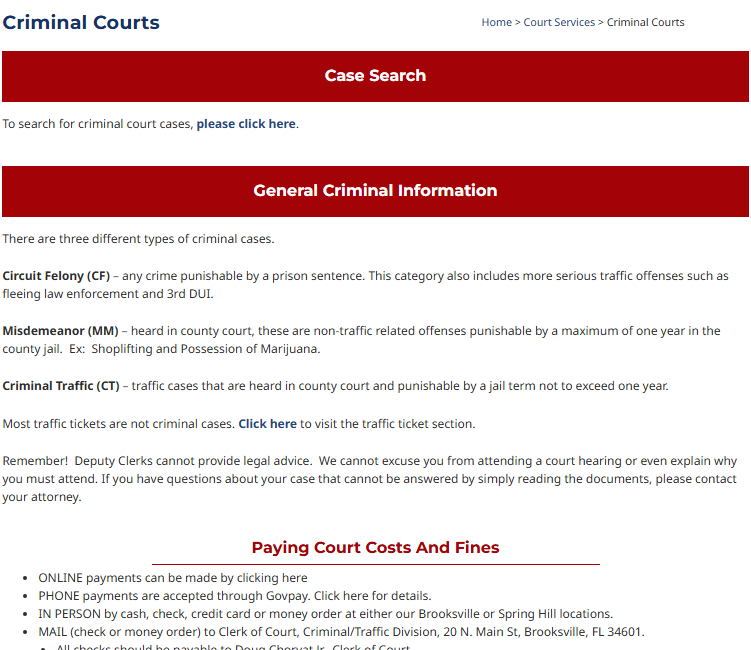
Hernando County criminal cases can be searched through the Hernando County Clerk of Circuit Court & Comptroller’s online case search system. The search tool allows users to locate criminal case information https://hernandoclerk.com/court-services/criminal-courts/ for felony, misdemeanor, and criminal traffic matters maintained by the court.
Criminal Case Information Available to the Public
The Hernando County Clerk maintains records for several criminal case types. Publicly available case information may include basic case details, filing dates, court events, and case status information.
The Clerk’s office identifies three primary criminal case categories:
- Circuit Felony (CF) cases
- Misdemeanor (MM) cases
- Criminal Traffic (CT) cases
Some records may be restricted by law and may not appear in public searches.
Searching Criminal Cases by Name
A name search is one of the most common ways to locate criminal cases in Hernando County. Users can enter a defendant’s first and last name into the court’s case search system to locate matching records. Using a complete legal name often improves search results. If multiple records appear, reviewing filing dates and case types can help identify the correct case.
Searching Criminal Cases by Case Number
A case number search provides the most direct method for locating a specific criminal case. Since each criminal matter receives a unique case number, this method usually returns the exact record associated with the case. Searching by case number can help users quickly review case information, court activity, and scheduled proceedings.
Information Found in Criminal Court Records
Available criminal court records may contain:
| Information Type | Details |
|---|---|
| Case Number | Unique court identifier |
| Case Type | Felony, Misdemeanor, or Criminal Traffic |
| Filing Date | Date the case was filed |
| Court Events | Scheduled hearings and proceedings |
| Case Status | Current progress of the case |
| Court Orders | Judicial actions and rulings |
The amount of information displayed may vary depending on court rules and record availability.
The Criminal Docket Entries
A criminal docket is the court’s record of events that occur during a case. Each entry documents an action taken by the court, attorneys, or other parties involved in the proceeding. Docket entries may show hearing dates, motions filed, court orders, case updates, and other procedural events that occur during the life of a criminal case.
Types of Criminal Cases Heard in Hernando County
Criminal cases Hernando County handles include felonies, misdemeanors, traffic crimes, and repeat offender situations. Each category carries different legal consequences. The court system divides its docket based on the severity of the criminal offenses. This division determines the rules for prosecution and the range of criminal penalties. The Fifth Judicial Circuit manages all these matters locally.
Felony Cases
Felony charges represent the most serious criminal cases Hernando County processes. These crimes include murder, armed robbery, and large-scale drug trafficking. Felonies carry potential state prison sentences. Circuit court judges preside over these matters. Convicted felons face long-term collateral consequences, like losing voting rights. Florida law mandates strict minimum sentences for many felony charges.
Misdemeanor Cases
Misdemeanor cases involve less severe offenses. Examples include petty theft, simple assault, and first-offense DUI. The county court handles these disputes. Penalties usually involve county jail time of up to one year, probation, or fines. A misdemeanor conviction still creates a permanent criminal record. Defendants must take these charges seriously.
Traffic-Related Criminal Offenses
Not all traffic tickets are civil matters. Serious traffic-related criminal offenses go through the criminal court. Reckless driving, hit-and-run, and driving on a suspended license are common examples. These offenses carry jail time and hefty fines. The court treats DUI cases with particular strictness due to public safety risks.
Repeat Offender Cases
The court treats repeat offenders with increased severity. Florida’s habitual offender laws mandate harsher sentences for people with prior convictions. A second DUI or a third theft charge escalates the criminal penalties. Judges often impose maximum sentences for repeat felony charges. The state attorney frequently seeks enhanced penalties for habitual offenders.
The Criminal Court Process
The criminal proceedings follow a structured path from arrest to final resolution. This process ensures the legal system treats every defendant fairly. Moving through the court system involves multiple steps. Each step has specific rules and requirements. Defendants must attend scheduled court appearances to avoid extra charges. The process moves methodically to protect everyone’s legal rights.
Arrest and Filing of Charges
The arrest process begins when law enforcement takes a suspect into custody. Police submit an arrest affidavit to the State Attorney. The prosecutor reviews the evidence. They decide whether to file formal charges. If filed, the case enters the court docket. The prosecutor holds sole discretion on what charges to file.
First Appearance Hearing
After an arrest, the defendant sees a judge within 24 hours. This first appearance informs the defendant of the charges. The judge verifies the person’s identity. Next, the judge addresses legal representation. The court appoints a public defender if the defendant cannot afford private counsel.
Bond Hearing
A bond hearing determines pretrial release conditions. The judge evaluates flight risk and community danger. They then set a bail amount or release the defendant on their own recognizance. Posting bail allows the person to go home before trial. The court may impose travel restrictions or monitoring as bond conditions.
Arraignment
The arraignment is a formal plea hearing. The judge reads the charges aloud. The defendant enters a plea of guilty, not guilty, or no contest. A not guilty plea pushes the case forward toward trial. A guilty plea skips the trial phase and moves directly to sentencing.
Pretrial Conferences
Pretrial conferences allow the prosecution and defense to negotiate. They discuss evidence, witness lists, and potential plea deals. Many cases resolve at this stage without a full trial. Defense attorneys often file motions to suppress evidence during this phase. The judge rules on these pretrial motions.
Trial Proceedings
If no plea agreement is reached, the case goes to trial. The trial process involves jury selection, opening statements, and witness testimony. Both sides present their evidence. The prosecution must prove guilt beyond a reasonable doubt. The defense challenges the state’s evidence vigorously.
Verdict and Case Resolution
After hearing all the evidence, the jury deliberates. They return a verdict of guilty or not guilty. A not guilty verdict ends the case completely. A guilty verdict leads to a sentencing hearing. The judge then imposes the required penalties based on Florida law.
Criminal Hearings and Court Appearances
Criminal hearings and court appearances are scheduled events where the judge, defense, and prosecution address the case. Attending these events is mandatory for defendants. The court sets specific dates for every legal issue. Hearing schedules dictate when parties must appear. The criminal docket lists all daily court events. Proper courtroom procedures ensure orderly conduct.
Initial Hearings
Initial hearings focus on basic case facts. The judge informs the defendant of their rights. The court appoints a public defender if necessary. These early appearances set the stage for future dates. The judge ensures the defendant understands the charges fully.
Motion Hearings
Attorneys file motions to request court actions. Motion hearings let both sides argue their positions. Common motions include requests to dismiss charges or exclude certain evidence. The judge rules on these motions directly in court. These rulings can significantly impact the case outcome.
Trial Hearings
Trial hearings are the most formal criminal hearings. They involve strict rules of evidence. Witnesses testify under oath. The judge controls the courtroom, ensuring the jury receives only admissible evidence. The prosecution and defense present their final arguments.
Mandatory Court Appearances
Most court appearances are mandatory. Missing a scheduled date results in a bench warrant for arrest. The court strictly enforces attendance. Defendants must arrive on time and dress appropriately. A failure to appear creates separate criminal charges.
Felony Court vs Misdemeanor Court
Felony court handles severe crimes with harsh penalties, and misdemeanor cases involve lesser offenses with lighter sentences. The two courts follow different procedural rules. Florida separates criminal matters by severity. The state uses different courts to manage these varying case types.
Key Differences
The main difference lies in the court level. Circuit courts manage felony offenses. County courts manage misdemeanor offenses. The rules for discovery and jury selection vary between these two courts. The table below highlights the primary distinctions:
| Feature | Felony Court | Misdemeanor Court |
|---|---|---|
| Court Level | Circuit Court | County Court |
| Case Severity | High (Violent crimes, large theft) | Low (Petty theft, minor assault) |
| Maximum Penalty | Life in prison or death penalty | 1 year in county jail |
| Jury Size | 6 or 12 members | 6 members |
Case Severity
Case severity dictates the court venue. Felonies involve severe actions like burglary or aggravated assault. Misdemeanors involve lower-level actions like disorderly conduct. The legal system treats violent crimes much more strictly than non-violent ones.
Potential Penalties
Criminal penalties differ vastly between the courts. A felony conviction leads to years in state prison, huge fines, and permanent loss of civil rights. Misdemeanor convictions bring county jail time under one year, smaller fines, and probation. Sentencing guidelines mandate specific penalty ranges for both levels.
Court Procedures
Court procedures vary by case level. Felony cases require more formal discovery and longer trial timelines. Misdemeanor cases move faster through the system. A felony trial might last weeks, and a misdemeanor trial often concludes in one day.
Sentencing in Criminal Cases
Sentencing occurs after a guilty plea or verdict, where the judge imposes penalties. The court uses various options like probation, fines, or incarceration. The sentencing phase is the final step in a criminal case. The judge reviews facts and decides the appropriate penalty. Court orders dictate the exact terms of punishment.
Factors Affecting Sentencing
Several factors influence the final decision. The judge reviews the defendant’s criminal history. First-time offenders often receive lighter sentences. The severity of the crime and victim impact statements play major roles. Florida’s sentencing scoresheets provide mandatory minimums for many felonies.
- Prior Convictions: Records increase sentence severity.
- Victim Impact: Statements from victims influence the judge.
- Severity Level: More harmful crimes receive harsher penalties.
- Plea Agreements: Negotiated deals often cap the maximum sentence.
Probation Options
Probation allows a person to remain in the community under strict supervision. The court imposes specific conditions, like drug testing or community service. Violating probation terms can lead to immediate incarceration. Hernando County offers standard probation and drug offender probation.
Alternative Sentencing Programs
Courts sometimes use alternative criminal penalties instead of jail. Drug court, mental health court, and pretrial diversion programs offer rehabilitation. These programs focus on treating the root cause of criminal behavior. Successful completion can result in dismissed charges.
Criminal Court Records and Case Information
Criminal court records contain official documentation of all legal actions in a case. The public can view these records through online portals or clerk offices. The clerk of the court maintains criminal court records for every case. These legal documents provide a complete history of the criminal docket.
Information Found in Criminal Records
A court case search reveals many details. Records include the original charging documents, arrest reports, and motions filed by attorneys. They show the arraignment plea, trial transcripts, and the final sentencing order. Every official action appears in the file.
Public Viewing of Court Records
Florida law guarantees public viewing of court records. The Sunshine Law ensures transparency in the justice system. Anyone can view most files. Certain sensitive information, like juvenile details or sealed records, remains hidden from general view. Social security numbers and bank details are redacted.
Criminal Case Search Resources
People can perform a court case search using the Hernando County Clerk of Circuit Court website. The online portal allows searches by name, case number, or date. The clerk’s office in Brooksville provides public terminals for in-person searches. The Florida Courts online system offers statewide search options.
Participants in a Criminal Court Case
Criminal proceedings involve several key participants, including the judge, prosecutor, defense counsel, and defendant. Each person plays a distinct role in the justice process. A criminal trial requires multiple people to function correctly. Each participant has specific duties to guarantee a fair trial.
Judge
The judge acts as the neutral referee. They oversee the courtroom, rule on legal objections, and enforce proper procedures. The judge determines the final sentence in non-jury trials. They ensure the trial adheres strictly to Florida law.
Prosecutor
The prosecutor, often called the state attorney, represents the State of Florida. They file charges and present evidence against the defendant. Their goal is to seek justice for the community and victims. The Fifth Judicial Circuit State Attorney handles all prosecutions locally.
Defense Counsel
The defense counsel represents the defendant. This attorney might be a public defender or a private lawyer. They challenge the prosecution’s evidence and protect the defendant’s constitutional rights. The defense provides the best possible legal advocacy for the accused.
Defendant
The defendant is the person accused of a crime. They hold the right to remain silent, the right to a speedy trial, and the right to confront witnesses. The legal system presumes the defendant is innocent until proven guilty.
Common Questions About Hernando County Criminal Court
People often ask about criminal cases in Hernando County, criminal court records, and court appearances. These answers clarify how the local system works. Many residents have questions about criminal hearings, sentencing, and court procedures. The following answers address the most common inquiries.
Are Criminal Court Records Public?
Yes, most criminal court records are public. Florida’s public record laws allow citizens to inspect case files. Exceptions exist for juvenile cases, sealed records, and sensitive victim information. The public can view standard documents anytime through the clerk’s portal.
What Happens After an Arrest?
Following an arrest, the police transport the person to the local jail. The defendant attends a first appearance hearing within 24 hours. The judge sets bond and reviews the charges. The state attorney then files formal charges based on the evidence.
How Are Felony Charges Handled?
Criminal cases hernando county processes for felonies start in the county court for the first appearance. The case moves to circuit court for arraignment and trial. Felonies carry severe penalties, requiring careful legal defense. The state attorney often uses grand juries for capital felony charges.
What Is an Arraignment?
An arraignment is the first formal hearing after charges are filed. The judge reads the charges, and the defendant enters a plea. A not guilty plea pushes the case forward toward trial. A guilty plea skips the trial and moves to sentencing.
Can Court Dates Be Rescheduled?
Yes, the court can reschedule court appearances. The defense attorney must file a motion for a continuance. The judge approves or denies the request based on the reason provided. Emergencies usually justify a schedule change.