Hernando County public records provide information collected and maintained by county agencies, courts, property offices, and other local departments. These records help residents review public information related to court cases, property ownership, recorded documents, marriage records, tax records, permits, and government activities. Public records Hernando County searches are commonly used by property buyers, researchers, business owners, legal professionals, and residents seeking verified information from official sources. Florida public records laws support public review of many government documents, helping people obtain facts from reliable county records. Whether searching for land records, court filings, public notices, or county documents, these records serve as a valuable source of information for personal research and record verification.
Public records Hernando County resources support government transparency by making a wide range of county information available for public review. Many records are organized through county databases and record management systems that help users locate information by name, case number, parcel number, address, or document type. Common record categories include criminal court records, civil case files, probate records, deeds, mortgages, liens, tax assessments, and official county filings. These records help users verify ownership details, review legal filings, examine historical documents, and research local government operations. As public access records continue to play an important role in community awareness, Hernando County public records remain a trusted source for factual and publicly available county information.
hat Are Hernando County Public Records?
Hernando County public records are documents created or received by local government agencies during official business. The public records definition covers any material that documents government activities, transactions, or decisions.
Definition of Public Records
Government records include paper documents, digital files, emails, maps, and photographs. The law classifies any item that records official action as a public document. Administrative records and legal documentation fall under this broad category. This means routine office emails, budget reports, and official court filings all qualify. A record exists the moment a government employee creates or receives a document relating to public business.
What Is Included and Excluded
The official records Hernando County maintains include property deeds, marriage licenses, court judgments, and meeting minutes. People can view most files without restrictions. Still, the law excludes certain files to protect privacy or security.
Exempt files include:
- Social security numbers
- Active criminal investigation details
- Medical records
- Bank account information
- Trade secrets
Agencies must redact exempt information from otherwise public documents. This practice protects sensitive data while keeping the rest of the file open. Redaction involves blacking out or removing the protected text before releasing the file.
Florida Sunshine Law Reference
The Florida Sunshine Law, along with the state’s Public Records Act, forms the backbone of transparency law in the state. This legislation requires that all government meetings remain open to the public. It also guarantees the right to inspect and copy government records. Florida established some of the strongest transparency laws in the country. The state government recognizes that public viewing keeps officials accountable. Hernando County complies fully with these state mandates. The county provides open viewing for all non-exempt files. Citizens exercise their rights when they request these documents. The system ensures that local government operates in the open, giving residents the power to review decisions and spending.
The Sunshine Law applies to all state and local government bodies. This includes boards, commissions, and agencies in Hernando County. Any gathering where official decisions are made must be open to the public. Minutes from these meetings become public documents. Citizens use these minutes to track how officials vote on local issues. The combination of open meetings and open records creates a transparent government structure. When a record contains both public and exempt information, the agency cannot withhold the entire file. The law requires the agency to provide the public portion. This partial release keeps the government accountable without compromising personal privacy. Residents can challenge an agency’s denial of a record. A judge then decides if the exemption applies.
How to Access Hernando County Public Records
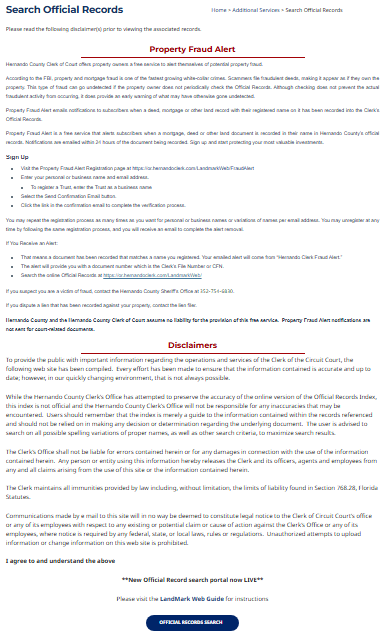
Hernando County public records can be obtained through online record searches, in-person visits, or mailed record requests. The method selected often depends on the type of file needed, the amount of information available, and how quickly the documents are required. Many county records are available through official search tools, clerk resources, https://hernandoclerk.com/additional-services/search-official-records/, and public record request procedures. Court files, property information, marriage records, official documents, and other government records may be available through different county departments.
Public records serve many purposes. Residents often review court filings, verify property ownership, check recorded documents, research local government information, or locate historical records. Knowing the available request methods can help reduce delays and improve document retrieval results.
Online Search Method
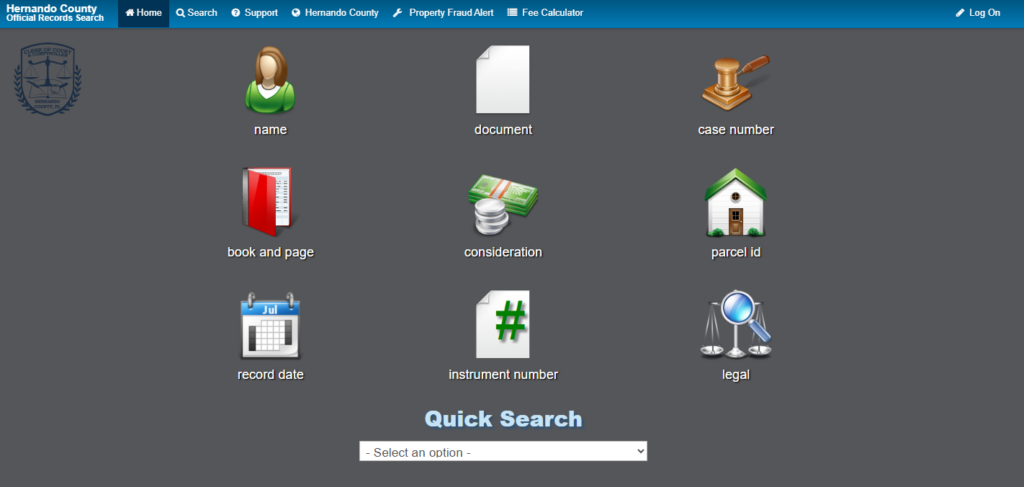
The online search method is often the fastest option for finding Hernando County public records. Many record types can be located through an online search system without visiting a government office. Users typically begin by locating the appropriate county database or clerk’s office portal. Different departments maintain different records, so selecting the correct search tool is an important first step.
Records available through online databases include:
- https://or.hernandoclerk.com/LandmarkWeb/
- Court case records
- Officially recorded documents
- Marriage records
- Property records
- Probate filings
- Civil case information
- Traffic case records
- Public meeting records
A typical search process includes:
- Open the official county search database.
- Select the record category.
- Enter available search details.
- Review matching results.
- Open the record summary.
- Download or request copies if available.
The quality of search results often depends on the information entered. Full names, case numbers, parcel numbers, filing dates, and document numbers can help narrow results.
Many public records databases allow searches by:
| Search Type | Common Information Used |
|---|---|
| Name Search | First and last name |
| Case Search | Case number |
| Property Search | Parcel ID or address |
| Document Search | Instrument number |
| Date Search | Filing or recording date |
Online systems provide public access to many records at any time of day. This option often saves travel time and allows users to review available information before requesting certified copies or additional documents.
In-Person Request
An in-person request remains a useful option for people who need assistance locating records or obtaining certified documents. Visiting the clerk office allows direct communication with staff who manage county records.
Many visitors choose this method when:
- Search results are incomplete.
- Older records are needed.
- Certified copies are required.
- Large document requests are involved.
- Record details are unknown.
Before visiting, gathering available information can make the process easier. Helpful details may include names, case numbers, filing dates, property addresses, or document references.
During a clerk office visit, a requester will typically:
- Provide record details.
- Complete any required request forms.
- Pay applicable copy fees.
- Receive documents or processing instructions.
Some records may be available immediately. Larger requests often require staff review and processing time.
Mail Request
Mail requests provide another option for obtaining Hernando County public records. This method works well for people who live outside the county or prefer written communication. A mail request generally begins with a written request form or letter that clearly describes the records being sought. Providing detailed information can help staff locate records more efficiently.
A complete request often includes:
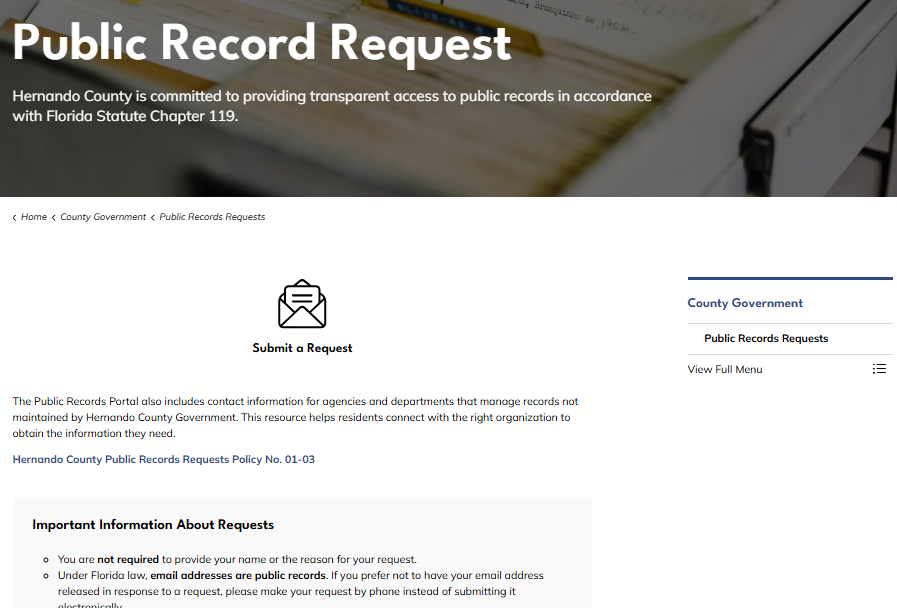
- https://www.hernandocounty.us/county-government/public-records-requests/
- Requester’s name
- Mailing address
- Contact information
- Record type requested
- Names connected to the record
- Case number or document number
- Relevant dates
The request should clearly state whether copies, certified copies, or record searches are needed.
A basic mail request process often follows these steps:
- Complete the required form or written request.
- Include identifying record information.
- Add payment if required.
- Mail the request to the appropriate department.
- Wait for processing and document delivery.
Processing times vary based on request volume, record location, and document type. Archived records, large files, and historical documents often require more time.
The table below outlines common mail request components:
| Requirement | Purpose |
| Written Request | Identifies records needed |
| Contact Details | Allows communication |
| Supporting Information | Helps locate records |
| Payment | Covers copy fees |
| Return Address | Delivers requested documents |
Many agencies recommend including as much information as possible. Accurate details can reduce search time and help avoid delays.
Types of Public Records in Hernando County
A county records search reveals several categories of documents kept by local agencies. People request legal filings and other files to verify facts, research history, or support court cases.
| Record Category | Primary Contents | Custodian Office |
|---|---|---|
| Property | Deeds, Liens, Mortgages | Clerk of Court |
| Court | Civil/Criminal Filings | Clerk of Court |
| Probate | Wills, Estates | Clerk of Court |
| Vital | Marriage, Divorce | Clerk of Court / DHSMV |
Property Records
Property records track the ownership and transfer of real estate within the county. Land documents include deeds, mortgages, liens, and plats. Residents search these files to prove ownership or check for outstanding liens on a piece of land. The county records every real estate transaction to maintain a clear chain of title. Title companies and buyers rely heavily on this data before closing a sale. Ownership records show who currently holds the title. They also list past owners back to the original land grant. The property appraiser adds value assessments, and the tax collector records payment status.
The official land documents show the legal description of the property. This description includes lot numbers, block numbers, and subdivision names. When a property owner pays off a mortgage, the lender files a satisfaction of mortgage document. This document proves the debt no longer exists. Mechanics file construction liens if a contractor goes unpaid. All these events appear in the property records.
Court Records
Court documents provide a detailed account of legal proceedings within the county judiciary. This category includes civil records and criminal records. Civil filings involve disputes between people or businesses, like lawsuits or small claims. Criminal records detail charges brought by the state against a person. These files contain arrest warrants, indictments, plea agreements, and sentencing details. People often search criminal records for background checks. The county clerk organizes these files by case number, making them easier to find.
Probate Records
Probate records deal with the distribution of a person’s assets after death. These files include wills, estate inventories, and guardianship papers. When a person passes away, the court supervises the settlement of their debts and the transfer of their property. Family members and executors use these documents to settle affairs legally. Wills submitted to the court become public documents. Estate records reveal the value of the deceased person’s property and the beneficiaries. The court ensures the executor follows the will’s instructions. Sometimes a person dies without a will. In these intestate cases, the court appoints an administrator. The administrator distributes assets according to state law. The probate court also handles guardianship cases for minors or incapacitated adults. These records protect vulnerable people by ensuring court oversight.
Marriage & Divorce Records
Vital records overview includes marriage and divorce documents. The county clerk issues marriage licenses and records the resulting certificates. Couples need these documents to change names or prove marital status. Divorce records, or dissolution of marriage documents, fall under court records. These files detail the terms of the separation, including child custody and asset division. People often need certified copies of these records for legal or personal reasons. The state office of vital statistics also holds copies of these documents for events that occurred after specific dates. Local offices provide direct viewing of recent filings and historical indexes.
Hernando County Clerk of Court & Records System
The Hernando County Clerk of Court serves as the official custodian of county documents. This office maintains the record management system and ensures the safe document storage of all legal filings.
Role of the Clerk’s Office
The county clerk’s office acts as the central hub for government records. The Clerk of Court oversees multiple duties, including recording deeds, issuing marriage licenses, and managing court files. This elected position carries the responsibility of protecting the public trust. The clerk attends all Board of County Commissioners meetings to record official minutes. They also manage the county’s financial records, ensuring transparency in spending. The clerk serves as the county’s chief financial officer and auditor. The clerk’s office handles jury management, processing juror questionnaires, and summoning citizens for duty. They also collect court fines and distribute the funds to state and local accounts. The clerk issues writs, such as summons and subpoenas, which initiate legal actions. Without the clerk’s administrative support, the court system could not function.
Record Maintenance and Storage
Maintaining records involves indexing, scanning, and archiving files. The record management system digitizes paper documents to preserve them and make them searchable. Staff members assign specific book and page numbers or case numbers to every file. This indexing creates a permanent trail. Document storage practices protect older files from damage. Climate-controlled vaults safeguard historic paper records. Digital backups protect against data loss from hardware failures or natural disasters. The clerk of the court records division processes thousands of documents every month. They ensure each file meets legal recording requirements before entering it into the system. When a person brings a document for recording, the clerk reviews it for compliance. The document must have proper signatures, notarization, and legal descriptions. If the document fails to meet these standards, the clerk rejects it. This review process maintains the integrity of the public record. The clerk also destroys records according to state retention schedules. This prevents the accumulation of outdated and unnecessary files. Retention schedules dictate how long different types of records must be kept. Some files, like property deeds, remain permanently. Others, like routine correspondence, face destruction after a few years.
Official Source Authority
The clerk acts as the official source authority for official records that Hernando County residents rely upon. Documents certified by the clerk carry legal weight in court and business transactions. Title companies, attorneys, and private citizens depend on the accuracy of these certifications. The clerk guarantees that a recorded document is a true representation of the original. This authority prevents fraud and resolves disputes over property or legal filings. By serving as the primary custodian, the clerk’s office provides reliable, unaltered records to the public. If a discrepancy arises between two documents, the clerk’s certified copy prevails as the legal truth.
Property Records in Hernando County
Hernando County property records contain detailed information about real estate within the county boundaries. People perform a land records search to find ownership verification, tax records, and historical real estate data.
Ownership Verification
Ownership verification proves who holds the title to a parcel of land. The official records list the current owner, the purchase price, and the date of the transaction. Anyone buying property must verify ownership to confirm the seller has the legal right to transfer the land. Title abstractors review these files to find any hidden claims or liens. A clear title guarantees the new owner full rights to the property. The chain of title shows every owner back to the original land patent. When a property transfers, the parties record a deed. Warranty deeds guarantee the title is clear. Quitclaim deeds transfer whatever interest the seller has, without guarantees. The recording fees support the clerk’s record management fund. Anyone can search by a grantor (seller) or grantee (buyer) name. This index reveals the history of a property’s conveyance.
Tax Records and Appraisals
The Property Appraiser’s office manages tax records and property assessments. These records show the assessed value of the land and buildings. The Tax Collector’s office tracks tax payments. Unpaid property taxes create a lien on the land. Buyers check tax records to confirm the seller owes no back taxes. The appraisal data also helps buyers compare property values in different neighborhoods. Homestead exemptions reduce the taxable value for permanent residents, and these exemptions appear in the property appraiser’s files. The millage rate determines the final tax bill. Local taxing authorities set this rate annually. Property owners can challenge their assessments if they believe the appraised value is too high. The Value Adjustment Board handles these petitions. The property appraiser maintains detailed sketches of buildings, showing square footage and room counts. This information helps verify that the physical structure matches the recorded data.
Real Estate Data and Plats
Real estate data includes maps, plats, and legal descriptions. Plats show the exact boundaries of a subdivision or individual lot. Legal descriptions define the property’s location using the township and range system. Surveyors and builders use these documents to plan developments or settle boundary disputes. The clerk records these plats to ensure the public can review them. Accessing these files helps property owners know their exact land rights. Investors review this data to evaluate potential purchases. The combination of deeds, tax files, and plats gives a complete picture of any real estate asset in the county. Plats also show easements, which grant others the right to use a portion of the land for utilities or roads. Before buying land, buyers should review the plat maps for setbacks. Setbacks dictate how close a building can sit to the property line. Deed restrictions also appear in the record. These restrictions might limit the type of fencing or the color of a house. The clerk records these restrictive covenants when a developer builds a neighborhood. Future buyers must abide by these rules. Checking the real estate data prevents future surprises for property owners.
Criminal & Civil Records Search
A criminal records search, or civil records inquiry, reveals the legal history of people or organizations in the county. These court filings document case history and legal proceedings from start to finish.
What Is Included in Criminal Records
Criminal records contain documents related to state-prosecuted offenses. These files include arrest reports, charging documents, plea agreements, and sentencing orders. Misdemeanor and felony cases both appear in the system. A criminal records search shows the final disposition of a case, meaning whether the person was convicted, acquitted, or had charges dropped. Background check companies and employers use these records to screen candidates. Certain sensitive cases, like juvenile records, remain sealed from public view. Expunged records also disappear from public databases. Arrest records without convictions might have restricted viewing under state law. The clerk categorizes criminal cases by severity. The county court handles misdemeanors, carrying penalties up to one year in jail. The circuit court handles felonies, carrying penalties of a year or more in state prison. The State Attorney files an “Information” to formally charge a suspect. The defense attorney files motions to suppress evidence or dismiss charges. All these filings become part of the public record. Probation files also track a person’s compliance with sentencing terms.
What Is Included in Civil Records
Civil records cover disputes between private parties. These cases involve personal injury claims, contract breaches, property disputes, and family law matters. The files contain the initial complaint, the defendant’s answer, and any motions filed by the attorneys. If the case went to trial, the record includes the final judgment. People search civil records to determine if a person or business has a history of lawsuits. This information helps assess risk before entering into contracts. Family court files deal with adoption, name changes, and domestic violence injunctions. Some family court details remain confidential to protect victims and children. Circuit civil cases involve amounts over $50,000. County civil cases involve amounts between $8,000 and $50,000. Small claims cases involve amounts under $8,000. The clerk maintains separate indexes for these divisions. Eviction cases, called tenant removals, fall under county civil. Landlords file these to regain possession of a property. Judgments in civil cases can create liens against a person’s property. Creditors search the civil records to find assets they can seize to satisfy a debt.
How to Search Court Records
People can search for court documents through the Hernando County Clerk of Court online portal. The search system requires the name of the party or the case number. Entering a date range narrows down the results. For a detailed case history, users can view the docket sheet. The docket lists every document filed and every action taken in the case. Certified copies of judgments or other filings are available for a fee. Requesters can buy these copies online or at the clerk’s service counter. Checking these records provides a clear view of a person’s past legal proceedings. Users can register for a free account on the clerk’s portal. This account allows them to save searches and track specific cases. The system sends email alerts when a new document is filed in a tracked case. This feature helps attorneys and involved parties stay updated. Older court records might exist only on microfilm. Researchers needing historical case files must ask the clerk for a microfilm search. The clerk provides public terminals at the courthouse to view these older reels.
Are Hernando County Public Records Free?
Viewing Hernando County public records access systems online is often free, but obtaining copies requires payment. The county charges fees to cover the cost of reproducing and certifying documents.
Viewing vs. Copying
Residents can view most documents on public computer terminals at the clerk’s office without paying. The free online search portal also allows users to see basic index information. Downloading or printing documents triggers copy charges. The fee structure follows Florida public law, which allows agencies to charge reasonable rates for copies. The law distinguishes between inspecting a record and taking a copy home. Inspection costs nothing. The free online portal provides a great starting point. Users can see party names, file dates, and document types at no cost. This allows researchers to find the exact file they need before spending money. Some counties charge for extensive online searches, but Hernando County’s basic name search remains free.
Standard Record Fees
- Uncertified copies: Usually $1.00 per page.
- Certified copies: Usually $2.00 per page, plus a certification fee.
- Plat copies: Prices vary based on map size.
Processing fees apply if a request requires extensive staff time to fulfill. The law permits agencies to charge a special service fee if the search takes longer than 30 minutes. The clerk’s office accepts cash, checks, and credit cards for payment. Knowing these fees helps requesters budget for their document needs. The revenue from record fees supports the record management system and helps fund the clerk’s operations. Certification fees usually add around $2.00 per document. A certified copy proves the document is a true copy of the official record. Courts and banks require certified copies for transactions. For example, a bank needs a certified copy of a satisfaction of mortgage to clear a title. E-recording vendors also charge convenience fees for online document submission. The county sets the statutory fees, and the clerk cannot waive them. Exempt entities, like other government agencies, receive copies without charge. The clerk publishes a complete fee schedule on the website. Requesters should consult this schedule before visiting the office. Prepaying for mail requests ensures the clerk processes the order without delay. If the payment exceeds the actual cost, the clerk issues a refund for the overage.
Common Problems When Searching Records
People sometimes face county records search issues when trying to locate specific files. Missing data, outdated records, and search limitations can slow down the process.
Missing Data and Errors
Older files might have missing data due to incomplete original submissions or damage. Clerks transcribe information from paper to digital systems, which occasionally introduces typos. A misspelled name prevents the search engine from finding the correct file. Using alternate spellings or partial names helps overcome this hurdle. Sometimes the original document lacked a proper legal description. This omission makes finding the right property file difficult.
Outdated Records
Outdated records present another challenge. The database might not show the most recent filings if the clerk’s office has a processing backlog. Real estate professionals often call the clerk to verify the latest status of a property title. The online system updates daily, but same-day filings might not appear until the next business day. Users must confirm they are looking at the most current data available.
Search Limitations
Search limitations occur when the online portal restricts search criteria. Some systems cannot search by partial parcel numbers or older book formats. In these situations, visiting the clerk’s office to search via microfilm or physical books provides a solution. Staff members can assist with searching older record formats. Some historical records exist only in heavy ledger books. The indexes in these books require manual page turning. Knowing these common roadblocks prepares users to adjust their search strategy and find the documents they need. Third-party websites often lack the updates found on the official county portal. Relying on outdated third-party data causes missed filings. The online portal might limit the number of search results displayed. Narrowing the date range solves this problem. If a user searches a common name like “Smith,” the system might return thousands of hits. Adding a middle initial or a document type filters the list. Users should check for variant name formats, such as “Robert” versus “Bob.” The search engine looks for exact matches. If the original clerk typed “Jon” instead of “John,” the system will not find the file under “John.” Trying multiple variations yields better results.
How Accurate Are Online Public Records?
Online official records Hernando County provides are generally very accurate, but users should always verify critical data. The clerk’s office prioritizes data accuracy, yet digital systems can occasionally display errors.
System Accuracy
The county uses strict quality control measures when indexing documents. Staff members double-check entries to match the original paper file. The database pulls information directly from official verification sources, making it a reliable tool for most searches. Still, a slight delay exists between when a document is filed and when it appears online. The index data usually appears first, followed by the document image. This delay means users might see a record exists before they can view the actual image. Data entry mistakes happen during high-volume periods. A clerk processing hundreds of mortgages a day might accidentally transpose two numbers in a parcel ID. The system also relies on the quality of the submitted document. If the original deed contains a typo, the clerk must record it as written. The clerk cannot change the content of a submitted legal document. The record reflects the document exactly as the submitting party prepared it. To fix a typo on a deed, the parties must record a corrective deed.
Verifying Information
Relying solely on online records for major legal decisions carries a small risk. Typographical errors in name spellings or legal descriptions happen occasionally. To guarantee data accuracy, request a certified copy directly from the clerk. A certified copy guarantees the document matches the official record exactly. Title companies rely on certified title searches rather than just online previews to protect buyers. Contacting the clerk’s office to confirm online findings ensures the information is correct and up to date. The official record always supersedes the digital index. If the index shows an error, the clerk can correct it by referencing the original document. The clerk’s office offers a formal document certification process. A deputy clerk compares the digital copy to the original file. They then stamp the copy with an official seal and sign it. This certification makes the document admissible in court. Self-printed copies from the internet lack this legal weight. Courts require certified copies to prevent fraud. For important transactions, spending the extra money on a certified copy provides peace of mind. The certified document serves as proof of the official record’s contents.
FAQs About Hernando County Public Records
People often have questions about the public records Hernando County agencies maintain. The following answers cover the search process, fees, and access rights.
Can anyone view Hernando County public records?
Yes. Florida law grants the public broad access rights to view government documents. Any person can request records without stating a reason. The county cannot ask for identification just to allow someone to view non-exempt files. This open policy applies to residents and non-residents alike.
How long does the search process take?
The search process depends on the method. Online searches yield instant results. In-person requests for records readily available take just a few minutes. Mail requests usually take one to two weeks. Complex requests requiring extensive staff searching might take longer. The law requires the agency to respond within a reasonable time.
Are there fees for copying records?
Yes. The county charges standard fees for copying and certifying documents. Uncertified copies cost $1.00 per page. Certified copies cost more. The clerk’s website lists the complete fee schedule. These fees cover the cost of paper, ink, and staff time.
What if the county denies a records request?
The county can only deny a request if the document falls under a specific legal exemption. If denied, the agency must cite the exact statute that exempts the record. Requesters can challenge a denial in court. A judge then decides if the exemption applies. The agency bears the burden of proving the record is exempt.
Can I remove my personal information from online records?
Florida law requires certain personal information, like social security numbers, to be redacted from public view. Citizens can contact the clerk’s office to request redaction of exempt information. The clerk’s office reviews the request and removes the protected data. This process helps protect against identity theft. General public information like names and addresses usually remains visible.