The Hernando County Court serves as a central part of the local court system, handling legal matters that affect residents, businesses, and visitors across the county. The Hernando County, Florida, Court manages civil cases, criminal matters, traffic violations, family-related proceedings, and other county-level court actions through established judicial processes. Many people search for Hernando County Courts to find court records, case details, hearing schedules, filing information, and courthouse resources. The court system helps keep legal proceedings organized and provides a structured setting where disputes, legal claims, and public matters can be addressed according to Florida law. As a result, the courthouse remains an important destination for people seeking reliable court information within Hernando County.
The Hernando County Court plays a significant role in supporting the county’s judicial system through court administration, case management, and public record services. Court operations involve judges, clerks, attorneys, jurors, and other court personnel who work together to process filings and conduct hearings. The courthouse handles thousands of legal transactions each year, making it a key source of court information for the public. People often visit or search online for details about court procedures, legal filings, case status updates, jury duty requirements, and courtroom locations. This page provides detailed information about the court system, courthouse functions, legal proceedings, and resources connected to the Hernando County, Florida, Court.
What is the Hernando County Court?
Hernando County Court serves as a key part of the local judicial system, handling many legal matters that affect residents, businesses, and public agencies. The court system in Hernando County helps maintain public order, resolve disputes, and support fair legal proceedings through established state laws and court procedures.
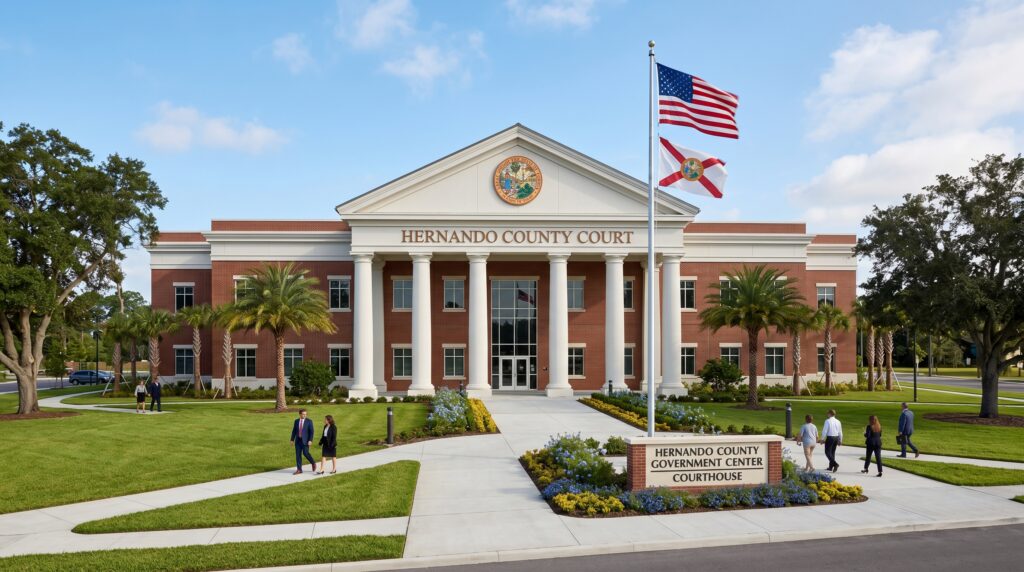
Residents often interact with the Hernando County Court for traffic cases, misdemeanor offenses, small claims disputes, landlord-tenant matters, and other civil court actions. Through structured court administration and case management processes, the court works to provide a fair setting where cases can be heard and resolved according to Florida law.
Purpose of the Court System
The primary purpose of the court system is to interpret and apply the law while protecting the rights of all parties involved in a case. Courts provide a formal process for resolving disputes and addressing legal matters fairly and impartially. Within the court system of Hernando County, judges review evidence, hear testimony, and issue rulings based on applicable laws. Court staff supports these functions through recordkeeping, scheduling, document processing, and public assistance services.
Purposes of the court system include:
- Resolving civil and criminal disputes
- Protecting constitutional and legal rights
- Enforcing court orders and judgments
- Maintaining official court records
- Supporting public confidence in the judicial process
These functions help create consistency and fairness throughout legal proceedings.
Role Within Florida Courts
The Hernando County Court operates as part of Florida’s statewide court structure. It handles matters that fall within county court jurisdiction and works alongside higher courts that address more serious criminal and civil cases. Florida’s judicial system follows a structured hierarchy. Each level has specific responsibilities that help cases move through the legal process efficiently.
| Court Level | Primary Function |
|---|---|
| County Court | Traffic, misdemeanor, and small claims cases |
| Circuit Court | Felony, family, probate, and major civil matters |
| Appellate Courts | Review lower court decisions |
| Florida Supreme Court | Reviews major legal issues and statewide matters |
Court Case Search and Case Information
A case search helps the public find court cases, review case activity, and check basic docket information. Court records often contain details about filings, hearings, parties involved, and case status updates within the Hernando County Court system. Court case information can help users track legal proceedings, verify court dates, and review public records connected to civil, criminal, family, probate, or traffic matters. A case lookup can save time by providing key details before a courthouse visit.
Case Search Tool and Method
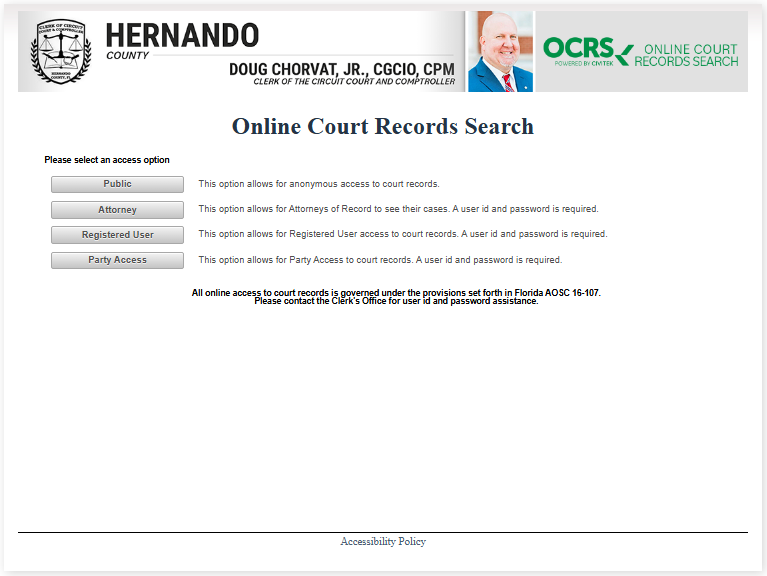
A case search in Hernando County Court can be performed through https://www.civitekflorida.com/ocrs/county/27/, the Florida Online Court Records system. This platform provides public record details, docket information, and case filings in one place.
How to Perform a Case Search
Users can follow a simple process to locate court cases:
- Click a record to view filings, hearings, and case status
- Open the official Civitek Florida Court Records Search page
- Select the appropriate county from the list
- Enter a case number or party name
- Review matching court cases and docket results
Case Search Method Using the Official Portal
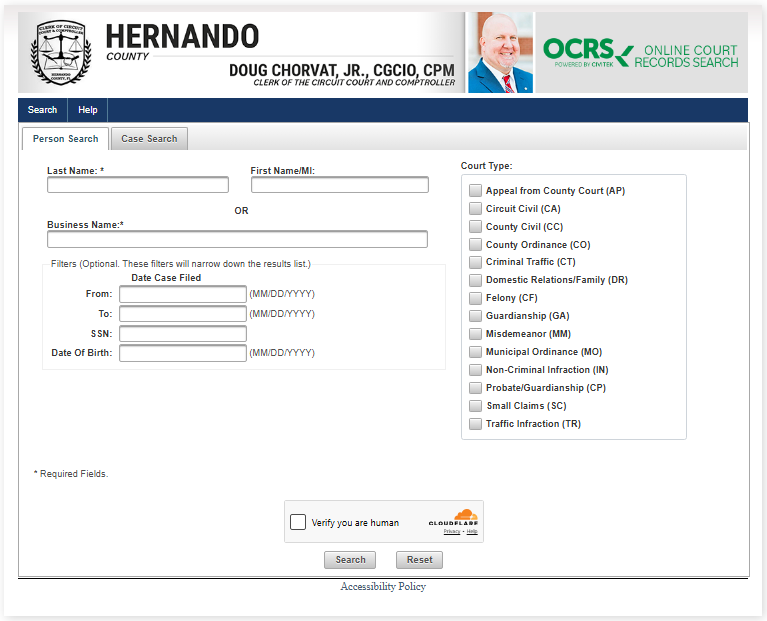
Users can search Hernando County Court records at https://www.civitekflorida.com/ocrs/app/search.xhtml, the official Florida Online Court Records Search (OCRS) public portal. This system allows quick case lookup by name, business name, or case details.
Steps Search Process
- Open the official OCRS search page
- Select the Person Search or Case Search tab
- Enter last name, first name, or business name
- Apply filters such as case type or filing date (optional)
- Complete security check (human verification)
- Click Search to view matching court cases
The Case Status Information
Case status information shows where a matter stands within the judicial process. Status updates can change throughout the life of a case as new actions occur.
Case status terms include:
- Open: The case remains active and pending.
- Closed: Court proceedings have finished.
- Disposed: The court has reached an outcome.
- Pending Hearing: A future court event is scheduled.
- Reopened: The court has returned a previously closed case to active status.
Reading case status information together with docket entries often provides a clearer picture of recent court activity. Court filings, hearing notices, and judicial orders frequently explain why a status changed and what may happen next in the legal process.
Hernando County Court Structure and Organization
The Hernando County Court operate through a structured judicial system that handles a wide range of legal matters. As part of the county court Florida system, the court is divided into separate levels and departments that support fair case management, judicial decision-making, and efficient court administration. The court structure helps move cases through the judicial process in an organized manner. Each court division has a specific role, allowing judges and court staff to focus on particular case types and legal responsibilities.
County Court
The County Court serves as the first-level trial court in Hernando County. This division handles many cases that affect residents daily.
Matters heard in County Court include:
- Traffic violations
- Small claims cases
- Landlord-tenant disputes
- Misdemeanor criminal offenses
- Civil cases involving lower monetary amounts
County Court judges review evidence, hear testimony, and issue rulings according to Florida law. This division often processes a high volume of cases, making it a key part of the local judicial system.
| County Court Functions | Examples |
|---|---|
| Traffic Cases | Speeding tickets, moving violations |
| Small Claims | Consumer disputes, unpaid debts |
| Misdemeanors | Minor criminal offenses |
| Civil Matters | Lower-value lawsuits |
Circuit Court
The Circuit Court handles more serious and complex legal matters. Hernando County belongs to Florida’s Fifth Judicial Circuit, which serves multiple counties within the state.
Circuit Court commonly hears:
- Felony criminal cases
- Family law matters
- Probate proceedings
- Juvenile cases
- Guardianship matters
- Major civil litigation
This court division often manages cases that require extensive legal review, multiple hearings, or jury trials. Circuit Court judges have broader authority and address matters that carry significant legal consequences.
Judicial Responsibilities
Judges play a central role in maintaining fairness throughout the judicial process. Their responsibilities extend beyond courtroom hearings and include many administrative and legal duties.
Judicial responsibilities include:
- Interpreting and applying Florida law.
- Conducting hearings and trials.
- Reviewing evidence and legal filings.
- Issuing court orders and judgments.
- Protecting constitutional rights.
- Managing case progression through the court system.
Each judge works to maintain impartiality and uphold legal standards. Through these responsibilities, the court promotes consistency and public confidence in legal proceedings.
Court Administration
Effective court administration supports the daily operation of Hernando County Courts. Administrative offices coordinate case records, scheduling, filings, and public services that keep the court system functioning efficiently.
Court administration commonly oversees:
- Case management systems
- Court calendars and scheduling
- Official court records
- Jury coordination
- Filing procedures
- Public information services
Many court divisions work together through administrative support teams. This coordination helps reduce delays, improve record accuracy, and support smooth courtroom operations. As a result, the Hernando County court system can manage thousands of legal proceedings each year while maintaining organized service for residents, attorneys, judges, and other participants in the judicial process.
Types of Cases Handled by Hernando County Court
The Hernando County Court handles a wide range of court cases, including criminal offenses, civil disputes, family-related matters, probate proceedings, and traffic violations. These cases move through different legal processes that involve court filings, court hearings, judicial review, and case resolutions. The court system serves an important role in resolving disputes, enforcing laws, and protecting legal rights within the county. Each case type follows its own procedures, deadlines, and legal requirements.
Criminal Cases
Criminal cases heard by the Hernando County Court involve alleged violations of state and local laws. These court cases often begin after an arrest, criminal complaint, or law enforcement investigation. The court reviews evidence, hears testimony, and determines whether the accused person is legally responsible for the offense. Common matters include misdemeanor charges, DUI offenses, theft, drug-related violations, and disorderly conduct cases. During legal proceedings, judges oversee court hearings, review court filings, and issue rulings based on Florida law. Criminal cases play a key role in maintaining public safety and accountability within the county judicial system.
Civil Cases
Civil cases focus on disputes between parties rather than criminal wrongdoing. These court cases often involve claims for money, property, contracts, or other legal disagreements. A civil case usually begins when one party files a complaint with the court. After court filings are submitted, both sides may present documents, testimony, and other evidence during scheduled hearings.
Examples of civil matters include:
| Civil Case Type | Typical Issue |
|---|---|
| Contract Disputes | Breach of agreement |
| Property Claims | Ownership disagreements |
| Debt Collection | Unpaid financial obligations |
| Small Claims Cases | Lower-value monetary disputes |
| Landlord-Tenant Matters | Rental-related conflicts |
Civil proceedings help parties seek legal remedies without criminal penalties.
Family Law Matters
Family law cases involve legal issues affecting family relationships. These matters often require careful court review since they can impact parents, children, and other family members.
The court may hear cases involving:
- Divorce and dissolution of marriage
- Child custody arrangements
- Child support matters
- Parenting plans
- Domestic violence protection orders
- Paternity actions
Family court hearings focus on reaching outcomes that comply with Florida law and support the welfare of children when minors are involved.
Probate Matters
Probate cases address legal issues related to a person’s estate after death. These proceedings help determine how assets are distributed and how financial obligations are handled.
Probate matters commonly include:
- Estate administration
- Will validation
- Appointment of personal representatives
- Guardianship matters
- Asset distribution
- Estate-related disputes
The court reviews documents submitted during probate proceedings and verifies that estate administration follows legal requirements. Judges may approve distributions, resolve disputes, or issue orders regarding estate management.
Traffic Violations
Traffic violations are among the most common court cases processed by the Hernando County Court. These matters involve alleged violations of traffic laws, including speeding, reckless driving, red-light offenses, driving without proper documentation, and other roadway infractions. Depending on the nature of the violation, drivers may pay fines, attend required programs, or appear at court hearings before a judge. Traffic-related legal proceedings allow drivers to respond to citations and present evidence when contesting charges. The court reviews each case and issues decisions based on applicable traffic laws and case facts.
Hernando County Court Records and Public Access
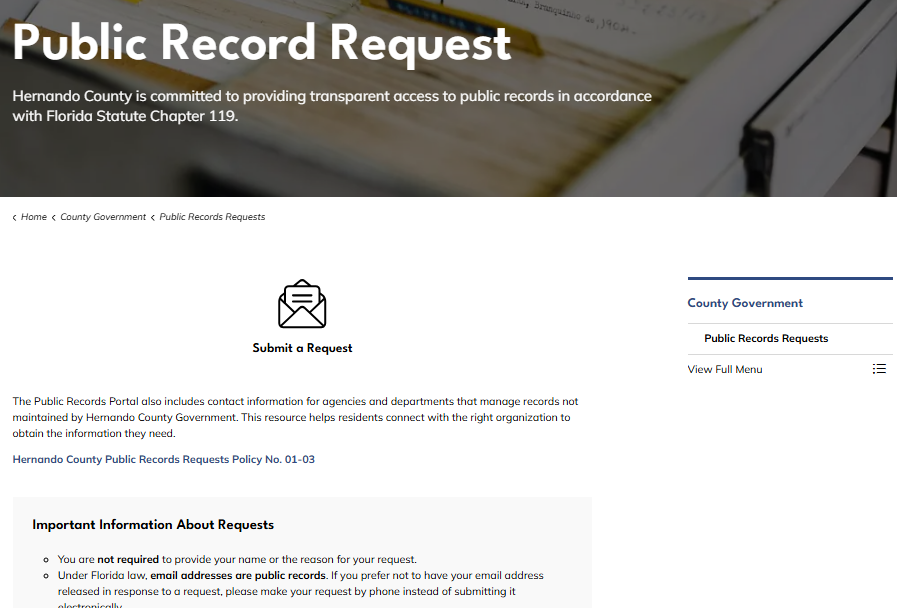
Hernando County Court records contain legal documents created during court cases, including civil, criminal, probate, family, and traffic matters. Many court records are available for public review, https://www.hernandocounty.us/county-government/public-records-requests/, though some files remain restricted by law to protect sensitive information. Court records play a key role in maintaining transparency within the Hernando County Court system. These records document legal proceedings, court decisions, filings, hearings, and other case-related activities. Public records help residents review case information, verify legal actions, and examine court activity within the county.
What Court Records Include
Court records consist of documents generated throughout a case from filing to final disposition. Each case type may contain different records depending on the nature of the legal matter.
Court records include:
- Case filings
- Court orders
- Judgments and rulings
- Hearing schedules
- Docket entries
- Motions and petitions
- Probate records
- Traffic case records
- Family court filings
- Civil lawsuit documents
- Criminal case records
These legal documents create an official history of court proceedings. Many records become part of the permanent court file and may remain available for future reference.
Public Access to Records
Public records laws allow many court documents to be reviewed by members of the public. This process promotes accountability within the judicial system and helps maintain confidence in court administration.
People often search court records to:
- Verify case status.
- Review court decisions.
- Check filing dates.
- Locate hearing information.
- Research legal history.
- Confirm judgment details.
Some court files may be available through electronic record systems, while others may require in-person review or formal record requests. Availability often depends on the case type and the age of the records.
Record Availability
Not every court record is open for public inspection. State and federal laws protect certain information from public release. Restricted records help safeguard privacy, security, and sensitive personal details.
Records that may have limited availability include:
| Record Type | Possible Restrictions |
|---|---|
| Juvenile cases | Confidential by law |
| Adoption records | Sealed court files |
| Mental health proceedings | Protected information |
| Certain family law matters | Limited disclosure |
| Records containing personal identifiers | Redacted details |
Court staff may remove confidential information before releasing documents. In some situations, a judge may order a record to remain sealed from public review.
Court Services Available to the Public
Court services in Hernando County Court provide residents with support for case-related needs, records, and general court information. These services help the public handle basic legal tasks through structured court systems and available support points. Court services mainly focus on three areas: administrative work, public help resources, and courtroom support. Each area plays a specific role in keeping court processes organized and easier for public use.
Administrative Services
Administrative services handle core court operations that keep case processing organized and accurate. These services support filings, record handling, and scheduling matters within the court system. In many cases, administrative staff manage case documentation and maintain official court records. They also support clerical tasks that connect the public with legal resources.
Administrative services include:
- Case filing intake for civil, criminal, and traffic matters
- Maintenance of court records and docket updates
- Fee processing for filings and copies
- Scheduling for hearings and court dates
- Verification of basic court information requests
| Service Type | Function | Public Benefit |
|---|---|---|
| Case Filing | Records new legal cases | Supports timely processing |
| Record Management | Maintains official files | Provides reliable legal resources |
| Scheduling | Sets hearing dates | Keeps proceedings organized |
Then, these services also help reduce delays in court processing. Staff coordinates with multiple departments to maintain consistent case flow.
Public Assistance Resources
Public assistance resources help residents who need basic support with court-related questions or forms. These resources often include help desks, self-help centers, and public terminals that provide general court information and case lookup options. They also offer access to standard legal resources such as filing forms and procedural instructions. This support helps individuals complete simple court-related tasks without confusion or delays.
Court Support Services
Court support services assist with activities inside the courtroom and during active case proceedings. These services include courtroom clerking, exhibit handling, and coordination between judges, attorneys, and court staff. They also support jury management, interpreter services, and case documentation updates during hearings. This coordination helps maintain order in proceedings and keeps court services running in a structured way for all parties involved.
Jury Duty in Hernando County
Jury duty in Hernando County requires eligible residents to take part in court proceedings as jurors when called. This civic process supports fair trials through structured jury selection and active court participation.
Courts send a jury summons to selected residents for juror service. This notice explains reporting dates, location, and instructions. Selection comes from voter registration lists and other official records. Not every summoned person serves on a trial, since selection depends on case needs and eligibility checks.
The Jury Service
Jury service involves a group of residents chosen to hear evidence in a court case. The process helps the court reach fair decisions based on facts presented during trial. Most people report to the courthouse and complete check-in procedures. Then they wait for a possible assignment to a courtroom. Some are released the same day if not selected. Others may serve on a trial lasting several days or longer.
Points of jury service include:
- Reporting at the assigned courthouse location
- Completing juror check-in and screening steps
- Receiving instructions from court staff
- Waiting for possible jury selection or release
Responsibilities of Jurors
Jurors hold specific duties during jury duty in Hernando County. These responsibilities support fair case review and structured decision-making inside the courtroom.
Responsibilities include:
- Listening to all the evidence presented during the trial
- Observing witness testimony without outside influence
- Following the judge’s instructions about legal rules for the case
- Maintaining neutrality throughout the process
- Deliberating with other jurors to reach a verdict
- Respecting court confidentiality during and after service
Jurors play a direct role in court participation. Their role helps maintain fairness in civil and criminal cases. Each decision is based on presented facts and courtroom procedures, not outside information.
Court Forms, Fees, and Filings
Court forms, court fees, and court filings in Hernando County Court follow structured procedures set by the Clerk of Circuit Court. These requirements help process legal documents correctly across civil, family, probate, and traffic matters. Court forms are available through the official clerk website and must match the correct case type. Filing procedures also require payment of court fees at the time of submission.
Court Forms
Court forms are standardized legal documents used to start, https://hernandoclerk.com/forms, respond to, or manage court cases. Each form supports a specific legal action and must be filled out accurately.
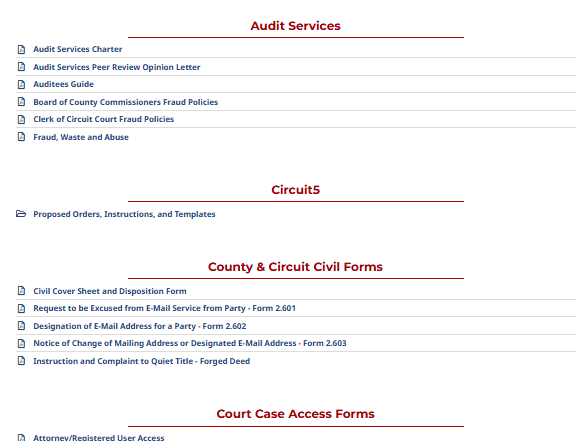
Official Hernando County court forms include:
- Civil cover sheets and complaint forms
- Small claims statements and worksheets
- Family law petitions and financial affidavits
- Probate administration and estate filings
- Traffic response and compliance forms
- Eviction notices and landlord-tenant petitions
These legal documents must include correct case details, party names, and signatures. Incomplete court forms can delay processing or require refilling.
Filing Information
Court filings in Hernando County are handled by the Clerk of Circuit Court. Filing procedures depend on case type and may be completed in person, by mail, or through approved electronic systems.
Basic filing steps include:
- Selecting the correct legal documents for the case
- Completing all required sections of the court forms
- Submitting copies for court records and the involved parties
- Paying filing fees at submission
- Receiving a case number after processing
Clerk staff reviews all filings for accuracy before entry into the system. Incorrect or missing information may result in rejection or delays in court filings.
Court Fee
Court fees in Hernando County vary based on case category, filing type, and claim value. Fees are set under Florida court statutes and collected by the Clerk’s Office at the time of filing.
Court fees:
| Case Type | Filing Fee (Approx.) |
|---|---|
| Small Claims ($0.01 – $99.99) | $55.00 |
| Small Claims ($100 – $500) | $80.00 |
| Small Claims ($500 – $2,500) | $175.00 |
| County Civil (up to $15,000) | $300.00 |
| County Civil ($15,000 – $30,000) | $400.00 |
| Circuit Civil Filing | $400.00 |
Hernando County Courthouse Information
The Hernando County Courthouse in Brooksville, Florida, serves as the central hub for court operations in the county. It handles civil cases, criminal proceedings, probate matters, and other judicial services under the Hernando County, Florida, court system. This courthouse also works alongside other court locations in the county to manage filings, hearings, and public records services.
Courthouse Facilities
The courthouse provides structured services for case handling, hearings, and record processing. It supports daily operations connected to county judicial activities and public filings.
Inside the facility, visitors can find:
- Active courtrooms for hearings and trials
- Clerk of Court offices for filings and records
- Public service counters for case assistance
- Waiting areas for scheduled appearances
- Security screening at building entry
The courthouse manages court calendars during set court hours, covering civil, criminal, and family divisions. Staff members assist with document processing and case-related inquiries throughout the workday.
Visitor Information
Visitors coming to the courthouse should expect standard security procedures at entry. Items may be screened before admission, and courtroom conduct rules apply inside all hearing areas.
Visitor points include:
- Arrive 20–30 minutes early for hearings
- Bring valid photo identification when needed
- Review case schedules before arrival
- Follow courtroom dress and behavior rules
Parking is available near the courthouse for public use, with designated areas for staff and visitors. Holidays and weekends may affect service availability.
Public Access Resources
The courthouse provides multiple access points for public records and case-related information. These services support transparency within the Hernando County, Florida, court system.
Available resources include:
- Online case search system for docket updates
- Clerk of Court contact support for filings and records
- Public terminals inside courthouse buildings
- Phone assistance for case status inquiries
These tools help users track hearings, confirm filings, and review case progress across different court locations in Hernando County.
Contact Information, Hours & Best Time to Contact
The Hernando County Courthouse provides several contact options for public assistance, filings, and general inquiries. Below is the essential contact and office information.
Courthouse Contact Details:
| Detail | Information |
|---|---|
| Phone | (352) 754-4201 |
| Fax | (352) 754-4243 |
| clerk@hernandoclerk.com | |
| Website | www.hernandoclerk.com |
| Address | 20 N Main St, Brooksville, FL 34601 |
Office Hours
- Monday to Friday: 8:30 AM – 4:30 PM
- Saturday & Sunday: Closed
- Public holidays: Closed
Best Time to Contact
- Mid-morning (9:30 AM – 11:30 AM) for shorter wait times
- Early afternoon (1:30 PM – 3:00 PM) for general inquiries
- Avoid Mondays and lunch hours due to higher call volume
These contact options help residents connect with the courthouse for case updates, filings, and administrative support within the Hernando County, Florida, court system.
(FAQ) About Hernando County Court
Quick answers help users understand Hernando County court services in a simple way. The Hernando County Court system manages case records, filings, hearings, and public access across civil, criminal, family, probate, and traffic matters. The FAQs below cover the most common court-related questions in clear language.
What court records are available at Hernando County Court?
Hernando County Court provides records linked to civil, criminal, family, probate, and traffic cases. These records include filings, judgments, hearing details, and case updates. Many records fall under public records rules and support legal research and case tracking. Users often review Hernando County court records for status updates and court information.
How does case search work in Hernando County courts?
Case search tools allow users to find court cases using a name, case number, or filing date. The system displays case status, hearing schedules, and basic filings. It helps users track civil, criminal, and probate matters. This system improves public access to Hernando County court information in a structured format.
What court services are offered in Hernando County Court?
Hernando County Court offers services such as case filing, document processing, record certification, and hearing scheduling. It also handles public records requests and court information support. These services help manage civil, criminal, and family matters efficiently across Hernando County courts while supporting public access to legal procedures.
How can public records be requested from the court?
Public records requests can be submitted through the clerk’s office in Hernando County Court. Requests may include case files, judgments, or official documents. Processing time depends on record type and request volume. The system follows public access laws while protecting sensitive court information within Hernando County courts.
How are traffic and family cases handled in Hernando County courts?
Traffic cases involve citations, fines, hearings, and dispute resolution for violations. Family court handles divorce, custody, and support matters through structured hearings. Hernando County Court processes both case types under state law, ensuring proper documentation, hearings, and record updates within the court system.